
 Juno Rylee Schultz
“… just all the little things living and dying around you, and all the connections that you make.”
GIRL MUSIC is independent music journalism for anyone that loves pretty art and music.
»Consider buying me breakfast or coffee on Ko-Fi/PayPal, or leaving me a small tip on Venmo.
« Contact me at juno.rylee.schultz@gmail.com if you need someone with experience in mock reviews, copy editing/writing, PR work, etc »
Words, research, and edits: Juno Rylee Schultz (she/her)
Research: Kylie Tuinier (she/her)
Edits: Bex Stump (she/her), Kylie Tuinier (she/her), and Nathan Thatcher-Miller (he/him)
The origins of Grandaddy can be traced back to Jason Lytle’s childhood, where he was encouraged to make art and bang out beats on his drum set as a six year old kid.
Lytle’s Step-Mom, who worked at a radio station, fed Jason’s musical desires further when she brought him stacks of records from work. The biggest artist to influence Jason during this time was an Electric Light Orchestra album.
When Jason was eight years old, he fell in love with skateboarding, giving him a new way to explore the world around him.
Beer and bad decisions would culminate in Jason robbing a skateboard shop in town as a 17 year old, which led to him going to juvenile hall for “two and a half weeks.”
Jason says if he had been 18 then he probably would have been charged more seriously and went to jail.
When Jason was 19 years old, music would become a much bigger part of his life, in part from skateboarding coming to an end, after an accident led to him tearing his ACL.
“It was a backyard ramp at my friend’s house, and there was a nail sticking up on the top of the ramp that I didn’t see.
I popped the nail, turned weird and came down on my knee. It just snapped.”
Jason walked with a limp for nearly ten years, until health insurance came with Grandaddy’s 1998 record deal, leaving skateboarding on the wayside. This did however give him more time for music, which led to him playing drums in a few “go-nowhere pick-up bands,” broadening his knowledge of music from “the narrow confines of the suburban skate-punk scene.”
“I would go hang out at the mall with my friends during the day, where we’d eat nachos and push each other into groups of girls and do all that stupid Beavis And Butt-head stuff. And then I would come home and put on Stravinsky.
I would just get wrapped up in it and do my homework. With the whole ELO thing, here I am in the middle of skateboarding, listening to bands like Fear and Suicidal Tendencies and just not being able to shake this thing that I have for rich, textural music, and it was something I had to keep to myself. The Cars was another band that totally opened my mind. I played Cars albums all the time, particularly the first one and Candy-O.
I just completely wore the albums out. I studied them from front-to-back: the blend of keyboards and guitar and the harmonies.”
During this time, Jason “worked a series of low-wage, eye-opening day jobs,” which expanded his mind to “the realities of the human condition.”
From driving a forklift at a 7-Up soda bottling plant to mopping the floors of retail stores, Jason became more aware of the trappings and inner-workings of life.
This also exposed him to machinery and robots that would handle low-skill tasks at jobs, which would leave an impression on Jason’s songwriting forever, as he continued to create music while also reflecting on the human condition.
Grandaddy wasn’t even formed yet, but the ideas that would coalesce into the lyrical themes of Grandaddy’s music were forming while Jason tried to fill the space between what it meant to be human in a world filled with crackling, campfire music and cold, steel machines.
Jason would begin procuring recording equipment and instruments after getting “a fairly lucrative day job working for his then-girlfriend’s father’s environmental-technologies company.”
He purchased keyboards, microphones, guitars, and digital-home recording equipment.
“I just ended up buying a microphone and a Yamaha MT 100 cassette 4 track. I had this job where I used to make a reasonable amount of money but it didn’t leave me with a lot of spare time.
I would just work and buy stuff… fill up this bedroom at my parent’s house… hoping that one day I could just quit and use it all. I ended up quitting and I got this house with a basement.
I think that’s when I really started to write songs. The songwriting and the learning of the recording process all bloomed together.”
His only obstacle he still needed to get past was that Jason Lytle hated how his voice sounded, which he thinks partially came from not being exposed to the right kinds of music yet.
“Maybe it would have been different if I were turned on to Lou Reed or Leonard Cohen, but at the time, I had no exposure to people like that.
Finally, I started to hear people that did know about people like that, like Steve Malkmus and Frank Black.”
The Beginning of Grandaddy
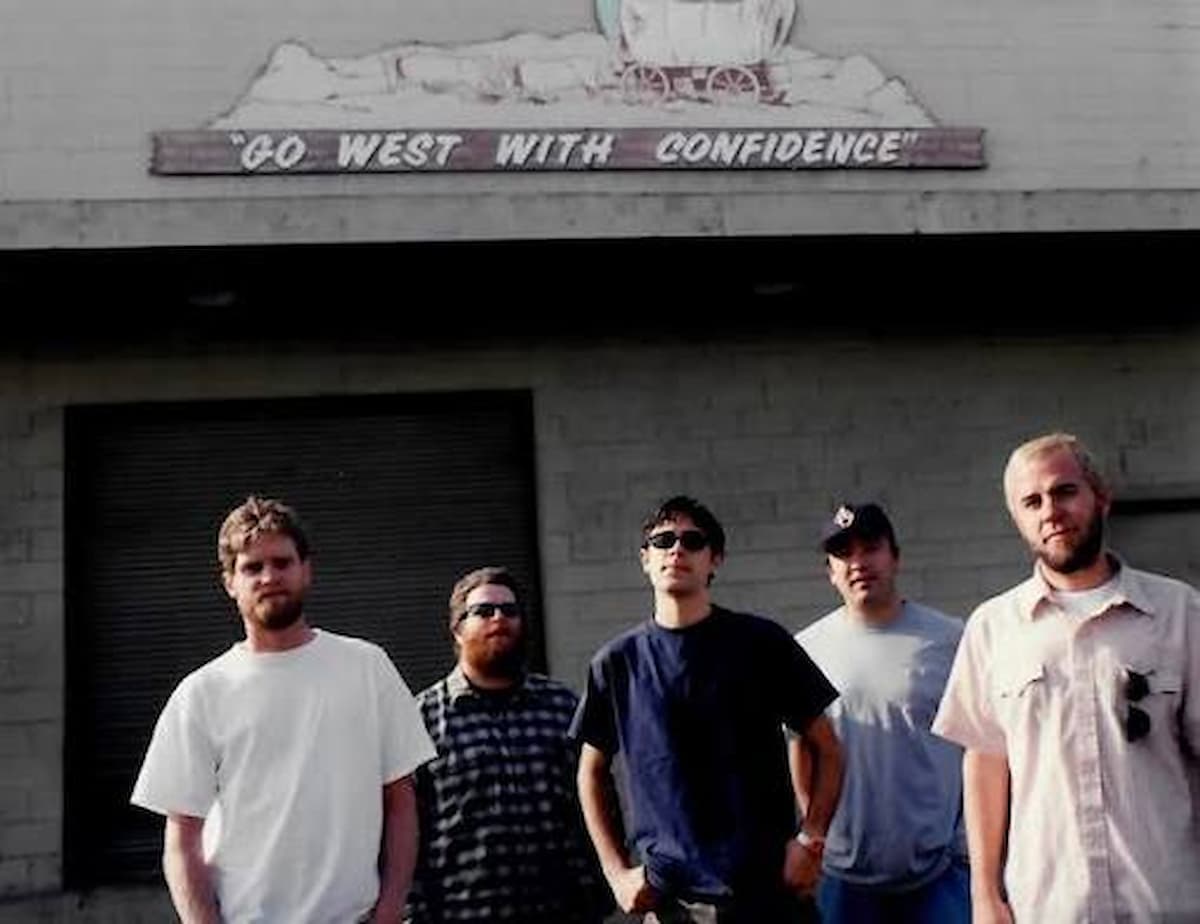
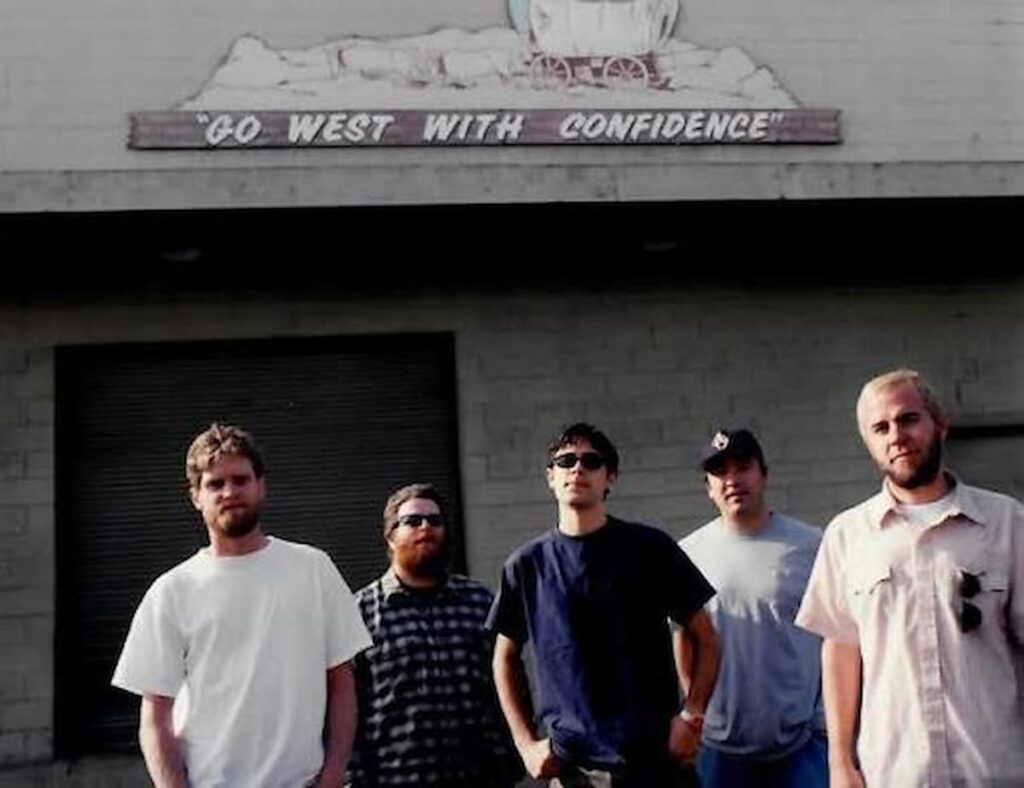
In 1992 at a skate park, Jason Lytle would meet Aaron Burtch, who played the drums, and Kevin Garcia, who played the bass guitar. The three men set up a jam session right away.
According to Aaron Burtch, the session went horrible at first, but “then Jason started playing us some of the songs he had been working on, and even then, they pretty much sounded like Grandaddy songs: quiet voice, falsetto singing, strong melodic sense.”
Soon after, Tim Dryden and Jim Fairchild joined the band, and then a name was chosen, which was the last piece of work necessary before the band could get to work on its music.
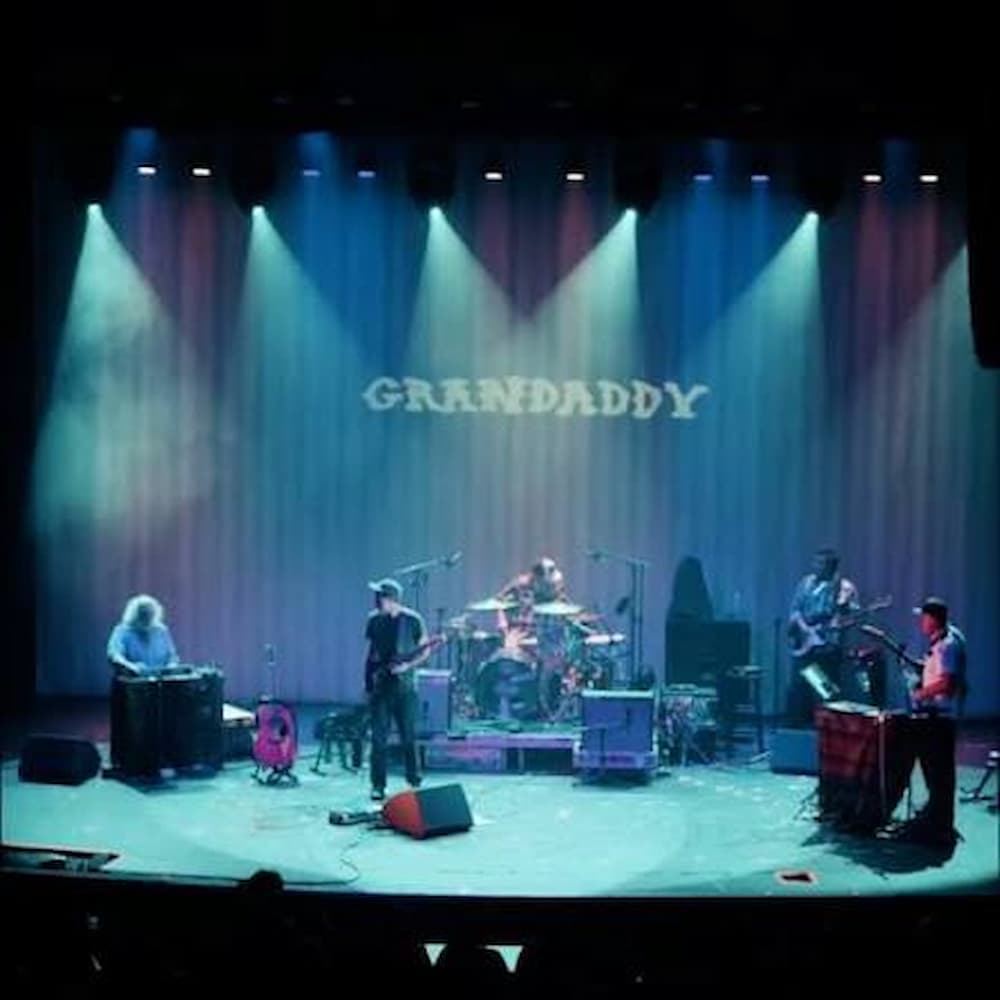
According to Jason Lytle, the band was called ‘Simple Simon’ for a while, which the guys didn’t like. The men put together a list and soon came upon the name ‘Grandaddy.’
It was simple, elegant, and also timeless.
“Somewhere there’s a list of all the crappy names we considered.
I remember having a conversation with Aaron explaining why Grandaddy was a good name:
It looked good on paper, it’s easy coming out of the mouth, and the timelessness of the idea of a grandfather. Also, it’s kind of a term that people don’t really use anymore.”
With a studio built inside of Lytle’s parent’s basement, Grandaddy began working on recording the music previously trapped inside of Jason’s head.
The band self-produced and self-published a string of EP cassette tape releases before touring on some of their music and getting to work on their first album.
The first tour was “complete misery” according to Jason Lytle.
The band traveled more than 600 miles, ate at gas stations, and played countless shows across 38 days. But the band still managed to have fun together.
“We bought this van, it was summertime and we had no AC, and we cut slits in the side of it and flared them out to scoop the air in, which scooped the rain in.
We put a couch in the back. My big present to everybody before we took off was each guy got their own spray bottle. There we are, just roasting on the freeway in our boxer shorts, spraying ourselves with water.”
In 1997 Grandaddy released their full, debut album, Under the Western Freeway, which didn’t make waves in sales, but was received well by music critics. In 1999, on the strength of their previous releases, Grandaddy would sign with V2, and move recording operations to a Modesto farmhouse. Jason Lytle’s home studio was freeing, but this newer, isolated space unlocked even more creative freedom.
Like previous releases, Grandaddy’s second album, The Sophtware Slump, was primarily inspired and based on Jason Lytle’s songwriting ideas. Now with a recording contract in hand, Jason Lytle and the rest of the band also had the luxury of time, and even more recording space.
“We had just gotten done doing a bit of touring around Under the Western Freeway, which was an album that came before that. And it ended up being one of those situations where we did this really modest release with it and then it just kind of, you know, we were like, “Oh whatever,” and then all of the sudden, something happened, some word got out and then there was some label interest and then all of the sudden there was this excitement happening that was happening a little bit over here but even more so overseas.
So based on the activity of Under the Western Freeway and a lot of demo songs that I had, we’d actually gotten a recording deal. And that was really exciting to me because at that point, I was really excited about recording and it was all so fresh and new. It was just a new frontier for me. At this point, we’d gotten this house out in the country about forty miles east of Modesto, which Modesto is already kind of podunk to begin with but I had to take it even a bit further. It was this big sprawling house on forty acres and we just hauled everything out there and we’re hanging out, you know we kind of turned into a bit of a commune.
We would rehearse out there for tours and then we would make records and just set up gear all over the place and experiment with all kinds of different recording techniques. And I remember as I was finishing, Under the Western Freeway, we had all just heard OK Computer for the first time and it was just like, I think there was one song left to go on Under the Western Freeway and we heard OK Computer and that had just completely blown my mind. And I was already fixated on how exciting and futuristic and weird and kind of enigmatic maybe the record could be and that definitely paved the way or sort of started planting the seeds for The Sophtware Slump.”
Jason essentially lived in the garage connected to the farmhouse, “and worked round the clock, and the band would come and go and come and go.”
Jason was focused and “a man with a mission on Sophtware Slump,” spending a lot of time alone, “excited” with “way less constraints.”
There was also even more recording equipment, but Jason says he was still in a “state of naivety,” which allowed him to be “a little bit more experimental.”
Grandaddy only had an A/C wall unit for the California summer weather, which, when combined with all the heat from the recording equipment crammed into the space, made conditions “sweltering.”
“It just got a bit comical. I was just in there in my boxers, just like sweating on a continual basis. I don’t know, that was all part of it. You just kind of get used to always being hot when you grow up in that area of California.
I mean if anything that imposes this sort of necessary little bit of pressure to get the take right. It’s just like, “alright, the longer the AC stays off, the more broiling it’s going to get so the quicker I get this take down…”
It’s like, who knows how much of the recording was actually affected by that (laughs). It could have been a lot of situations where I’m like, “fuck it, that’s good enough. I can’t take this anymore.”
I have pretty good stamina already as it is and I can go, you know, even with athletic pursuits and like cycling and running and stuff, I like kind of going long and pushing myself.
But it’s like, with music and creativity, there’s actually something else that happens where it’s like you get these really wild results when you start pushing yourself past the brink.”
Looking back on the album, in an interview done years later, Jason Lytle said that he recalled The Sophtware Slump as an album with a lot of great moments, as a songwriter and as a producer.
“I don’t think I really had much time to sit around to pat myself on the back about anything. It was just really cool that other people’s take, in all these different forms so far reaching, kind of started to take shape.
And it just became what it became. I could have never predicted any of it. So I’m all for being positively surprised and that’s definitely what happened with The Sophtware Slump.”
Grandaddy would tour as openers for Elliott Smith for ‘The Sophtware Slump,’ with Smith even joining the band on stage for vocals on some performances.
The band’s next album, Sumday, would be recorded at Jason Lytle’s basement home studio. This was an album Lytle described as “Grandaddy influenced by Grandaddy … the ultimate Grandaddy album.”
The band would break up in January 2006, for a myriad of reasons but most notably because the band was broke. Touring was essentially a break-even situation for the band, and album sales were waning. Everyone was also just burnt out and wanted to pursue solo projects.
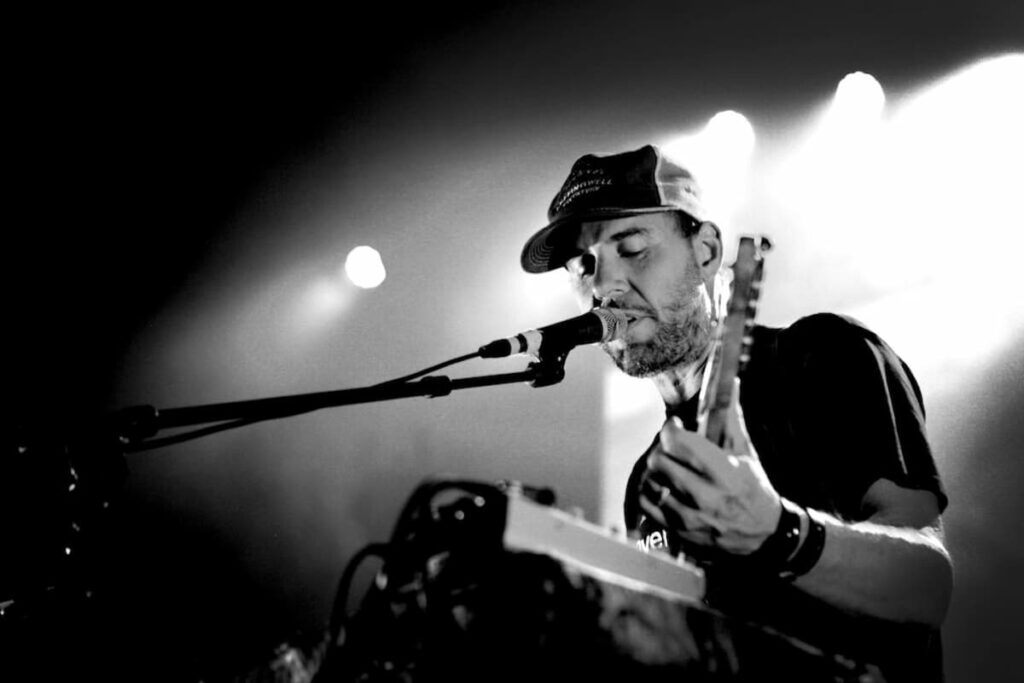
In 2009, Lytle reiterated his interest in continuing to pursue music solo, saying he “was a bit of a loner.”
However, in the 2010s Grandaddy would reunite and play a limited tour, which included some shows in the United States, as well as overseas in the United Kingdom. This was done to get some money for the band, without it being too much stress, as the band was playing festivals instead of full-on tours. Lytle also described everyone as “being stoked” to hang out and play together again.
Grandaddy released their fifth studio album, Last Place, in 2017, which would also mark another hiatus for the band, as Kevin Garcia would tragically pass away from a heart attack two months after the album’s release.
This also resulted in the band canceling the ‘Last Place’ tour. Memorial shows were scheduled but then canceled as well, due to the band’s grief over the loss of Garcia.
In 2024, Jason Lytle would release ‘Blue Wav’ under the Grandaddy name but Lytle is the only member from the band included on the album. It feels like Grandaddy, but with an overhanging blues vibe, which feels appropriate for a band that spoke so honestly about the tragedies and joys of the human experience.
“To this day, I’m amazed that we pulled it off considering that none of us are trained musicians. It was really sweet and kind of naive and done in blind faith. I can’t complain.
We had a really good run.
We affected a lot of people and had a really good time.”