
 Juno Rylee Schultz
“…now, more than ever, they appear to measure their safety in chains and corpses” – James Baldwin
ALL THIS HAPPENED, MORE OR LESS is independent political and history journalism for anyone interested in information about how reality got here without sponsors.
»Consider buying me breakfast or coffee on Ko-Fi/PayPal, or leaving me a small tip on Venmo.
« Contact me at juno.rylee.schultz@gmail.com if you need someone with experience in mock reviews, copy editing/writing, PR work, etc »
Words, research, and edits: Juno Rylee Schultz (she/her)
Research and edits: Kylie Tuinier (she/her)
Edits: Bex Stump (she/her) and Nathan Miller (he/him)
Almost all crime stems from basic needs not being met, and it is the purpose of copaganda to distract from this fact.
According to Alec Karakatsanis, from his book, Copaganda: How Police and the Media Manipulate Our News:
“Copaganda is a specific type of propaganda in which the punishment bureaucracy and the powerful interests behind it influence how we think about crime and safety.
The government determines what things are considered a “crime” subject to punishment versus what things are permitted or tolerated even if they hurt people.
Then, the government determines what kinds of punishments are appropriate for the conduct it prohibits. Across history and different societies, the definition of crime and how it should be punished has varied depending on who has power and what serves their interests, not an objective evaluation of what causes harm.”
The powerful define crime to suit their interests, making some things legal and others punishable. They also decide how what is criminalized gets punished.
Karakatsanis writes about how law enforcement “rarely responds to most violations of the law” and “only enforces some criminal laws against some people some of the time.”
The choice on who is targeted for crimes–and possible crimes–is always determined based on the idea of maintaining the power structures in America, which exist solely for that purpose, and have nothing to do with health or safety.
This is why America’s jails and prisons are filled with non-violent, marijuana-related drug charges, instead of from the CEO’s and executives that routinely cause death and devastation, from mass layoffs, environmental damage, wage theft, etc
From Copaganda: How Police and the Media Manipulate Our News:
“That is why most of the undercover police operations in hundreds of U.S. cities target disproportionately Black, Hispanic, and immigrant people instead of other police officers, prosecutors, real estate developers, fraternities with histories of drug distribution and rape, or corporate board rooms with histories of tax evasion, fraud, and insider trading.”
This has happened throughout history, and is often only spoken of from people within the groups targeted by the government since it is these marginalized groups that the power of the law is so often used against them.
This system of violence is held up and in place by those who benefit from this inequality and imbalance of power. And it’s far bigger than most realize, due to the commercialization of the punishment bureaucracy.
From Copaganda: How Police and the Media Manipulate Our News:
“Many people know about privatized prisons, but even bigger industries profit from nearly every aspect of the administration of public human-caging facilities, including medical care, food, telephone calls, digitized mail, cash transfer systems, “education,” tablets for entertainment, so-called “treatment” programs, and prison industries that make products for the world’s largest corporations with modern-day slave labor.”
The commercialization of the punishment bureaucracy extends beyond the average person’s imagination, with many companies and industries being involved, further strengthening the ties inside the tangled mess.
The surveillance industry and its tools add to the power of police and guards while bringing in record profits for the tech companies, including Flock Safety, Motorola Solutions, and countless other companies.
Perhaps one of the biggest examples of the amount of money and power exchanging hands is from Palantir, which, in a “$30 million contract” with ICE, built a platform combining data “to provide near real-time visibility of migrants in the country.”
Every company involved in the manufacturing and distribution of equipment and technology police and guards use, from chemical gas to flock cameras, profits off of the punishment bureaucracy while also adding to its perceived validity.
All who participate in this process profit off it and add to its power, regardless of the views they may hold, and, as Karakatsanis explains, this group of people “who depend on the punishment bureaucracy for their livelihoods has created an ideological foundation that enables many of them to believe their role in the bureaucracy makes our society safer.”
Essentially, even if all of the people profiting off of jails and imprisonment don’t agree with it morally, it doesn’t matter; the system is still propagandized and added to regardless of what anyone involved believes.
Understanding how these groups create, spread, and perpetuate the myths of Copaganda is paramount for meaningfully understanding and untangling from the terrors of the prison industrial complex at the center of our world.
Copaganda works in a few ways, with three primary focuses.
The first job is to limit our understanding of the threats we actually face.
Instead of the executives of DuPont being charged for poisoning the majority of America’s water systems, or Johnson & Johnson being held culpable for giving Moms and babies cancer, copaganda frames the actions of poor people struggling to survive as the real crime.
According to Alec Karakatsanis, “The first job of copaganda is to narrow our conception of threat.”
He elaborates further by explaining the magnitude of real, actual crime committed by the rich, against the poor, while the problems of the latter are disregarded.
“Rather than the bigger threats to our safety caused by people with power, we narrow our conception to crimes committed by the poorest, most vulnerable people in our society. For example, wage theft by employers dwarfs all other property crime combined–such as burglaries, retail theft, and robberies–costing an estimated $50 billion every year. Tax evasion steals about $1 trillion each year. That’s over sixty times the wealth lost in all police-reported property crime.”
Despite “hundreds of thousands of known Clean Water Act violations each year,” which we know is causing “cancer, kidney failure, rotting teeth, damage to the nervous system, and death,” the focus of crime remains focused on the poor, rather than those affecting devastation against our shared world.
Copaganda keeps us focused and angry on the wrong problems, while blaming the wrong people, instead of introducing actual accountability against the real criminals.
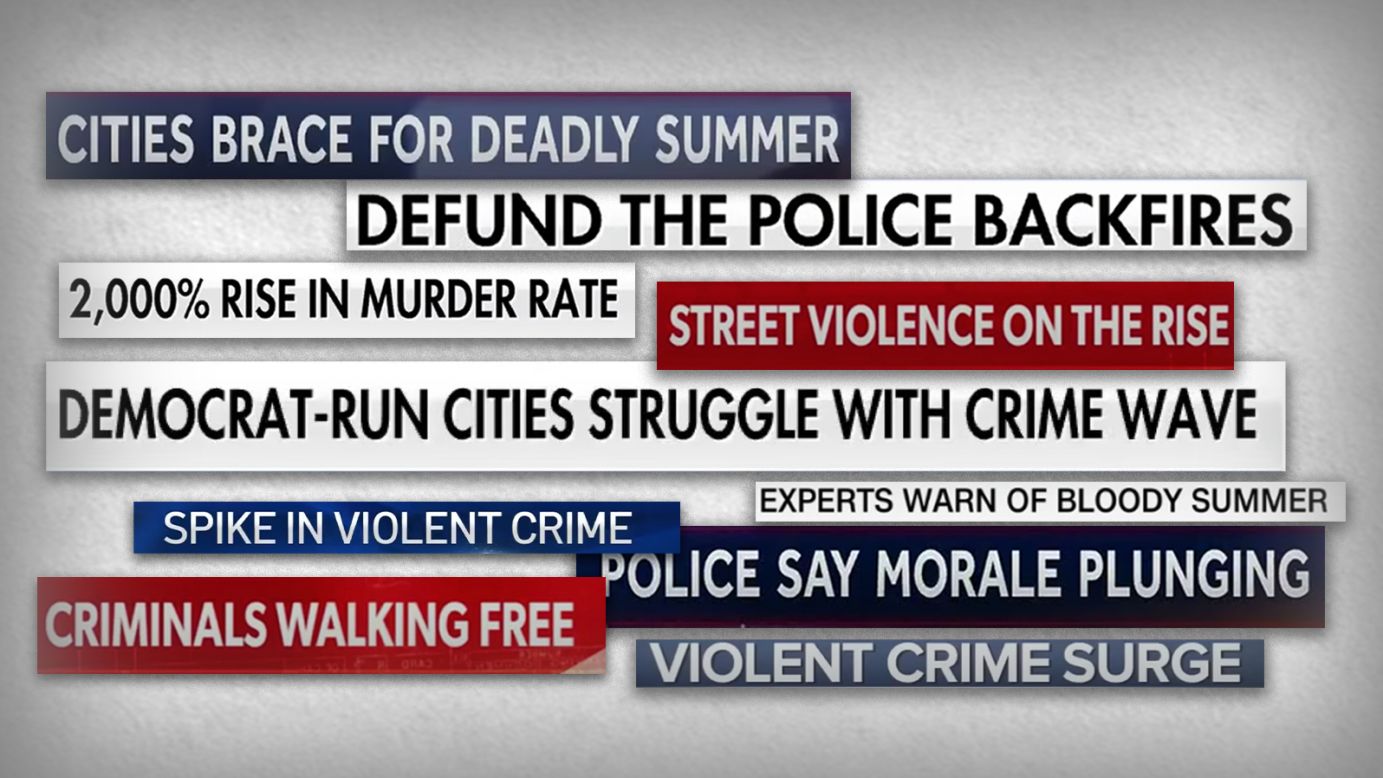
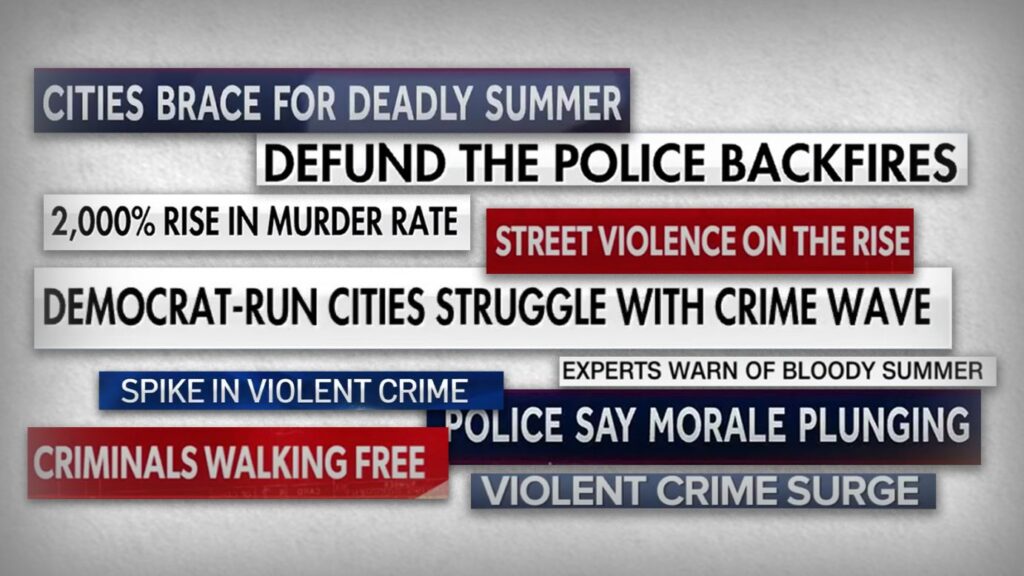
The second objective of copaganda is to instill fear into as many people as possible, by any means necessary. This helps in keeping people distracted from banding together against real crimes, like wage theft and illegal evictions.
Following the death of George Floyd in 2020, the public was barraged with a frenzy of “crime wave” puff-pieces “concerning various forms of crime committed by the poor” despite government reports revealing “overall property and violent crime” being “at near-historic fifty-year lows.”
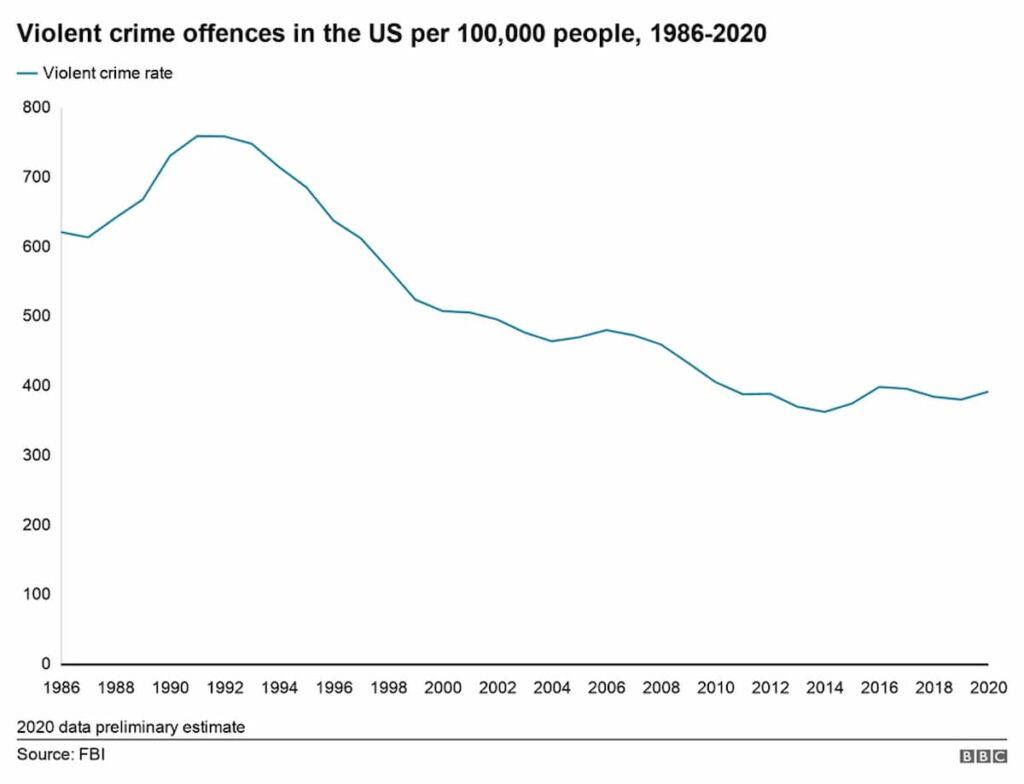
Alec Karakatsanis explains how “as a result of continual news-generated panics, nearly every year of this century, public opinion polls showed people believing that police-reported crime was rising, even when it was generally falling.”
This is the goal of copaganda though, which perpetuates “a vague state of fear” against “poor people, immigrants, and racial minorities” as opposed to the rich and powerful, who have the means to collectively break meaningful laws to cause real harm to us all.
This leaves the public fearing strangers, neighbors, and starving, homeless people, instead of connecting the dots to the real damage and harm being done in our society.
As Alec Karakatsanis explains, “This matters because when people are in a perpetual state of fear for their physical safety, they are more likely to support the punishment bureaucracy and authoritarian reactions against those they fear.”
The third purpose of copaganda is to routinely convince the general public that there is a link between less crime and funding the prison system and police force.
From Copaganda: How Police and the Media Manipulate Our News:
“Copaganda links safety to things the punishment bureaucracy does, while downplaying the connection between safety and the material, structural conditions of people’s lives.”
This is obviously false, though, because if police and prisons kept us safe, “we would be living in the safest society in world history” with the “staggering $445 billion” that “flows annually through policing, courts, corrections and immigration enforcement.”
Alec Karakatsanis writes about how there is “overwhelming evidence” that “controllable things,” like poverty and access to healthcare, that could be addressed to “lower police-reported crime,” but that this would steer the focus away from the fake, propped up issues that serve as distractions.
It is from the focus of the news, and the cycle of copaganda being spread, that repeatedly creates more harm, instead of ever fixing any of our problems.
Adding further to the tangled web of lies is the massive efforts and money spent on the public relations branch of law enforcement, which is such a large amount of money, it’s often obfuscated and hidden from plain view.
In Copaganda: How Police and the Media Manipulate Our News, Alec Karakatsanis writes of how deep this mysterious, often hidden spending goes.
“After the 2020 racial justice protests, a Los Angeles Times investigation found that the Los Angeles County Sheriff’s Department alone had forty-two full-time employees dedicated to shaping public information.
The LAPD had another twenty-five full-time PR employees. Some of them made more than $200,000 a year.
That’s sixty-seven cops doing public relations manipulation across just two departments in one county–and Los Angeles has almost fifty other municipal and state police forces that don’t report this information and that weren’t included in the Times’s investigation.”
Another similar investigation was done in New York City, in 2024, and it was revealed that NYPD had “at least 86 full-time employees in the NYPD public relations department.”
None of this money includes spending on “branding, logos, slogans designed and printed on cop cars, [or] public events,” like parades, or when police pass out toys to kids. Or the rainbow-painted, pride-focused police cars. This spending goes far deeper than any investigation could hope to fully show us, because of the efforts undergone to hide the data from the public.
Alec Karakatsanis explains how these investigative efforts “did not count programs run by police unions using dues funded by public money,” which are often “supplemented by a network of multi-billion-dollar private police foundations, non-profits, and political action committees,” all using “a vast operation of publicly subsidized funding and professional relationships to affect news coverage.”
It’s inside the relationship with mayor’s offices and news agencies where copaganda grows and spreads further than imaginable.
Inside the busy lives of reporters comes the stress of having to find stories to fill air-time, during morning, afternoon, and evening news–and 24-hour news channels–and it is here where copaganda is able to connect further.
Finally, there is an industry of for-profit media consulting firms that cater to police departments for damage control after police kill people.
Police are secretive about this vast ecosystem because they want news coverage to appear spontaneous and not carefully cultivated.
From Copaganda: How Police and the Media Manipulate Our News:
“Police PR employees do not just call reporters and tell them about a story. They build long-term relationships of mutual benefit. When police PR teams prepare stories for the media, they often contain video, audio, screenshots of documents, charts, and other easy visuals that require less work for the journalists.
Police and prosecutors pay spokespeople to be briefed and prepared for soundbite interviews, or otherwise make available employees who are prepared to be on camera, give quotes, or spend time with the reporter “on the background” to shape the reporter’s understanding of the story. They also suggest “experts” they have vetted and connect reporters to those experts.”
Police PR units work tirelessly to create content for the news, and most reporters are too busy to notice or care about these propagandized stories.
It is here where the police are able to create “an ecosystem of validation,” where networking between news agencies, police PR, and police groups create a relationship of sourcing news stories, often anonymously, to shield police sources from accountability.
Journalists should take time to verify information given to them, but the temptation to keep cops as sources, and the allure of not having to do research often proves to be too difficult to resist.
As Alec Karakatsanis explains, ” [Police] build lists of experts, selectively provide them data, fund and cherry-pick research, and spend time working with researchers on talking points for journalists with whom they help the experts connect. These police officials–and their coordinated surrogates–routinely have calls with editorial boards and opinion columnists, who rarely seek public safety experts outside such networks.”
If social workers, healthcare workers, and environmental groups had the same power and reach of police public relations, then perhaps the news–and by extension, our world–would look far different than it currently does.
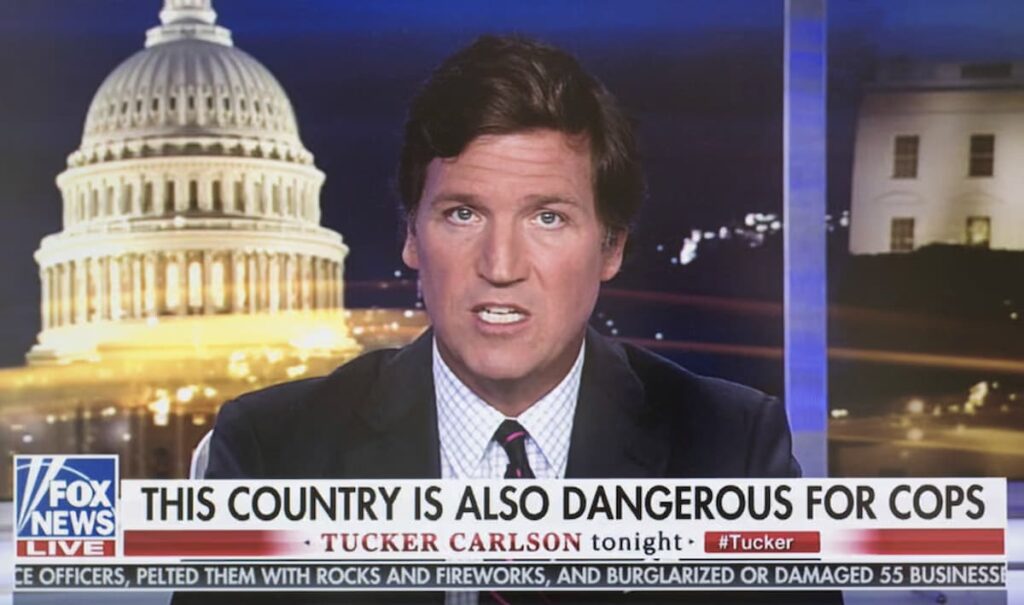
As Karakatsanis explains, “What the news treats as urgent affects what we think is urgent. It shapes what (and who) we are afraid of. It helps dictate what we demand from our political system, and from each other.”
Alec Karakatsanis has a detailed list that can help you, me, and all of us in holding information and sources more accountable. He writes that “when you see a news story about public safety, [you should] look at the sources reporters have chosen to tell the story [and] ask yourself [the following]:
- Whose voices are included?
- Who benefits from this point of view being presented as news?
- What harms to which people in which places at which times do the sources emphasize?
- Was anyone with a viewpoint critical of the punishment bureaucracy included? If included, where in the article were views challenging the narrative put forward by punishment bureaucrats placed? Whose voices were prioritized?
- How did the reporter choose which voices to quote and which to ignore?
- How might this source have gotten to the reporter?
- Which sources were granted anonymity and why?
- Did the reporter include skepticism for claims made by punishment bureaucrats, or note whether the source has a history of dishonesty or conflicts of interest? Did the reporter include skepticism for claims made by any critics of the punishment bureaucracy?
- How, if at all, would this story have been told by different groups of sources with different perspectives?
- What does the ownership, consolidation, and business models of media companies play in determining which sources with what views are presented?
Karakatsanis also says it’s important to recognize that yes, journalists do need to rely on experts, but we should ask ourselves how these sources made their way to the reporting journalist. It is inside of this relationship where we can often identify conflicts of interest, or even just poor reporting that has no basis in reality.
Karakatsanis writes that “when [we] read a news article that quotes an expert, [we should] ask [ourselves] a few questions:
- Who chose this expert?
- How did this expert make their way to this journalist?
- Who benefits from this expert opinion?
- Does anything about the expert’s background suggest a conflict of interest?
- Does this expert or the article offer a sound basis for their conclusions?
- Is this expert frequently chosen by news outlets to present this view?
- Does this article suggest that different experts have a difference of opinion on the issue?
- Does this article offer critics of the expert’s view a chance to explain the basis of and reasons for their disagreement?
Our world is complex, and so are our shared problems, but if we work together to broaden our understanding as to why and how things are the way they are, including our internalized views on crime and safety, that we can untangle our present for a better future.
We have all of the data imaginable that points to what causes suffering, violence, and crime in our society. And if we come together and recognize where crime actually comes from, only then will we be able to see reality for what it is and change it.