
 Juno Rylee Schultz
“All Western nations have been caught in a lie; the West has no moral authority.”
ALL THIS HAPPENED, MORE OR LESS is independent political and history journalism for anyone interested in information about how reality got here without sponsors.
»Consider buying me breakfast or coffee on Ko-Fi/PayPal, orleaving me a small tip on Venmo.
« Contact me at juno.rylee.schultz@gmail.com if you need someone with experience in mock reviews, copy editing/writing, PR work, etc »
Words, research, and edits: Juno Rylee Schultz (she/her)
Research: Kylie Tuinier (she/her)
Edits: Bex Stump (she/her), Kylie Tuinier (she/her), and Nathan Miller (he/him)
From its founding and formation, America’s only ever existed as a group of propagandized principles centered around protecting power stolen via slavery, death, and subjugation. This blood remains in our soil and legal system–through the consistent de-humanization of black and brown people–until we all consciously untangle from the lies intentionally spread by white supremacists seeking power.
It is within the words and poetry of James Baldwin where we can find the necessary instructions to all become the vessels of hope where we can save each other … and our shared world.
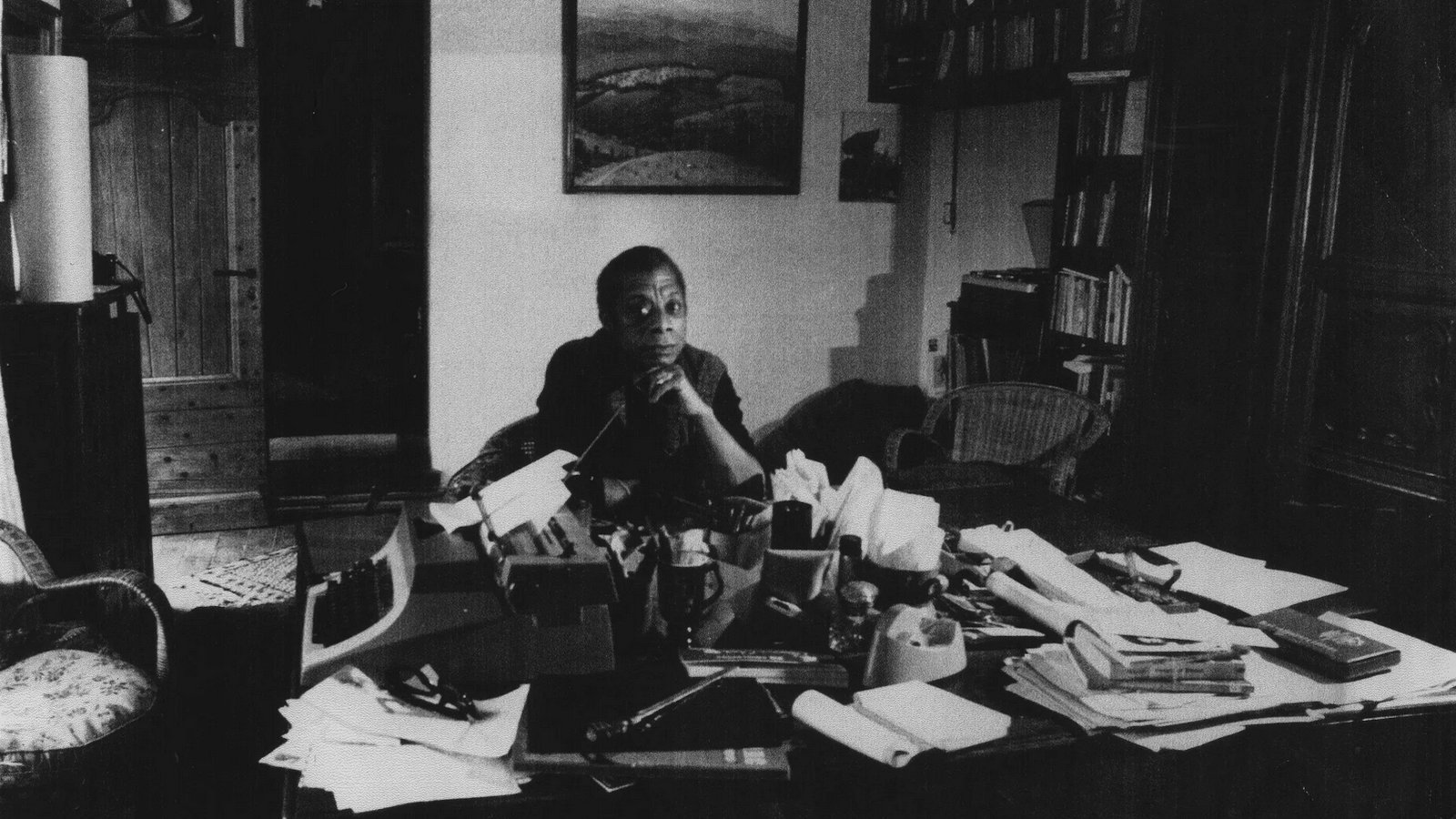
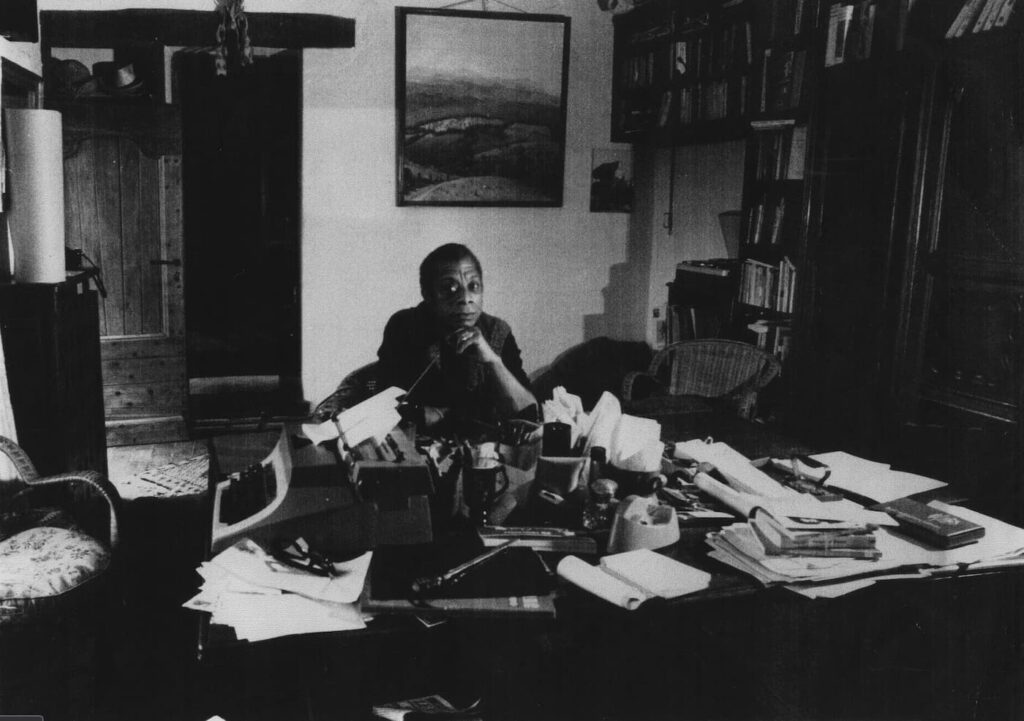
James Baldwin was born in New York City, but left for Paris after receiving the advance on the sale of his first novel. This was because Baldwin did not wish to try to discover who he was inside America, where he could only imagine terror.
“When and why I was going to Paris.
When was November 11, 1948. It was a matter of life or death.
You can’t turn your back in America long enough to write a book … or to find out who you are.”
James Baldwin
Meeting the Man: James Baldwin in Paris (1970)
Baldwin saw no means by which to extract himself from his traumas–systemically speaking–and so physical distance from America was achieved for space to work and breathe.
“…I left [America] because I knew I was gonna be murdered there. And when I say that, I’m not, you know, exaggerating, that’s not a melodramatic statement. I mean that, I mean that … [laughs heartily with the room of Black peers he is speaking to]. I mean that I could not have hoped to live if I had stayed there.
I come from a country which is very proud of calling itself a democracy and is very proud of what it calls progress. And I’m pointing out to you that 22 years later boys and girls just like I was then, in spite of all that democracy and progress, had to leave the country, our country, for the same reason that I left it. 1948 it was Truman in the White House, right? And he’d just dropped a bomb on Hiroshima. And, in 1971, there’s who in the White House? What do they expect from us? The darker brother?
I’ve had a hard life, you know? [laughs with the room]. But, my dear … no, really, I know it sounds a terrible thing to say … I would not be a white American for all the tea in China. All the oil in Texas. I really wouldn’t like to have to live with all those lies.
This is what is irreducible and awful. You, the English, you, the French, you, the West, you, the Christians. You can’t help but feel that there is something that you can do for me. That you can save me. And you don’t yet know … that I have endured your salvations so long, I cannot afford it any more. Not another moment of your salvation. And that I can save you. I know something about you. I know something about you. You don’t know anything about me. And that is where it really is.”
James Baldwin
Meeting the Man: James Baldwin in Paris (1970)
In 1970, while James Baldwin was in Paris, a British film crew filmed a documentary fixed around Baldwin speaking about his literary work, or rather that was their goal. Instead what followed was Baldwin forcing the conversation away from the monument of remembrance for France’s former Bastille prison, away from their preconceived and misunderstood notions of activism, and into a room with other Black individuals.
What took place was what he wanted: a conversation about the Black experience, and how it is white people that do not know what is going on.
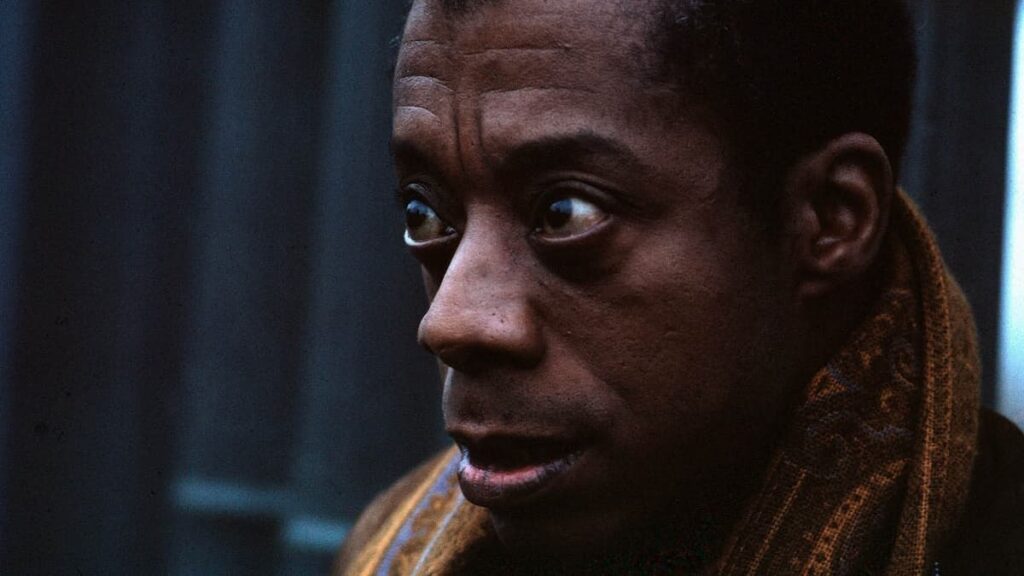
“I am not interested in Jimmy Baldwin’s Paris. I’m not the least interested in my 22 years in this city. It’s of no importance at all. What is important is I’m a survivor of something and a witness to something. That is what matters. And that is all that matters. I’m not speaking for me. I’m much too proud, for one thing, to speak for my own work. My work will speak for itself or it won’t.
But I am a Black man in the middle of this century. And I speak for that. To all of you. The English, the French, the Irish, all of you. Because none of you know yet who this dark stranger is. None of you know it. And that is what this quarrel is really about. I’m not at all what you think I am. I’m very different from that.”
James Baldwin
Meeting the Man: James Baldwin in Paris (1970)
One of the reasons Baldwin wanted to have this conversation is that many of the white people of this world, who believe themselves to be conscious–woke, elevated, aware–still think the solution lies in tearing down prisons and speaking about equality, instead of listening to Black people literally in the room.
“When they tore [the Bastille] down, that was a great event in European history. And Europe understands that. I am trying to tear a prison down too. That event doesn’t yet occur, in European imagination. I am still for Europe, a savage.
When a white man tears down a prison, he is trying to liberate himself. When I tear down a prison, I’m assumed to be turning into another savage. Because you don’t understand … that you, for me, are my prison. You are my warden. I am battling you. Not you, Terry [speaking to the interviewer]. But you, the English, you, the French. A whole way of life, a whole system of thought … which has kept me in prison until this hour.”
James Baldwin
Meeting the Man: James Baldwin in Paris (1970)
Slavery dates back further in history than the existence and concept of racism. Blackness and whiteness are both constructs intentionally created from lies by people who called themselves white while enslaving Black people to gain wealth and power.
Prior to this junk, race science being created by rich men who labeled themselves white, slavery made these white people more uncomfortable. It was through Prince Henry of Portugal, and his propaganda from Gomes Zurara, that the first lies of racism were planted and laundered.
“I think it’s important for people to know that the original “slave,” when people thought about that, that original slave, it wasn’t people who looked like me.
The Western European slave market had been dominated for hundreds of years by Eastern European slavs. The root for the term slave is Slav. So why suddenly, are we primarily enslaving, you know, African-American people?”
Dr. Ibram X. Kendi
Stamped from the Beginning
“When we look at race, we have to look at the fact that race has not always been a given.
We came across that water, and we were Fula, we were Igbo, we were Yoruba, Wolof. We were Mandinka. But somewhere across the Atlantic, we became one community.”
Honorée Fanonne Jeffers
Stamped from the Beginning
“We need to remember that slavery, it’s a piece of human history. Humans enslave each other. They have for as long as there have been empires and states and war, but something different happens in 1444.
It’s the moment in which the first cargo of captives, who are captured by the Portuguese in Senegambia, are brought to Portugal to be sold. That, for me, is the beginning of what becomes the transatlantic slave trade.”
Dr. Jennifer L. Morgan
Stamped from the Beginning
“Prince Henry of Portugal saw the value of African people in Western European slave markets. They were more valuable than Eastern European Slavs because it was harder for them to run away. It was harder for them to blend into the population. And so he financed expeditions to the source.
Prince Henry didn’t want to admit that he was violently and brutally enslaving African people to make money. And so he dispatched a royal chronicler by the name of Gomes Zurara, to write his story. Gomes Zurara justified his slave trading by stating that Prince Henry was doing it to save souls, and that these people in Africa were inferior, were beast-like.”
Dr. Ibram X. Kendi
Stamped from the Beginning
Oftentimes we assume that race is only about the color of one’s skin, the grade of one’s hair, or whatever. It is about slavery.”
Dr. Angela Davis
Stamped from the Beginning
“Gomes Zurara’s book wasn’t just the first major text by a European written in Africa, it also became a bestseller. These racist ideas of African people as beastly started circulating around Western Europe.”
Dr. Ibram X. Kendi
Stamped from the Beginning
“Gomes Zurara wrote that people with different skin colors, and different languages, and different cultures from different nations, were one people. One Black people. One Black people worthy of enslavement.”
Dr. Ibram X. Kendi
Stamped from the Beginning
“The work is naturalizing these racial hierarchies. They’re indoctrinating us.
I mean, that’s how popular culture works, and that’s how power works, right? We don’t realize it’s working until it’s done its job.”
Dr. Autumn Womack
Stamped from the Beginning
“Gomes Zurara invented Blackness. But he didn’t necessarily create whiteness. And whiteness as a construct really didn’t start to emerge until the 1500s, and certainly the 1600s.”
Dr. Ibram X. Kendi
Stamped from the Beginning
“In the early days of the slave trade here in the US, Black people weren’t the only enslaved people. We had indentured servants from Europe, who were trying to make their way, and they lived in conditions that were just one step above slavery.”
Dr. Brittney Cooper
Stamped from the Beginning
“The Servants and Slaves are employed together in tilling the ground and planting tobacco. An indentured Servant shall not absent himself, day nor night from his said master. He shall not play. Nor contract matrimony.”
Of Servants and Slaves in Virginia (1722)
“One of the greatest fears of white landowners was that white indentured servants and Black enslaved people would come together in their common interest to fight against the white elite.
And it became clear that this was a real possibility during an incident called Bacon’s Rebellion, when Black people and white people joined together to revolt against white landowners.”
Dr. Dorothy Roberts
Stamped from the Beginning
“Bacon’s Rebellion was able at one point to topple the capital of Virginia. It scared wealthy white enslavers to death. They saw that unity between white indentured servants and enslaved Africans, you know, as their Armageddon.”
Dr. Ibram X. Kendi
Stamped from the Beginning
“That made it very clear to white landowners that they needed to invest more in separating indentured servants and enslaved people. They created a whole legal apparatus to give indentured servants privileges by the fact that they were white, that Black people couldn’t have.”
Dr. Dorothy Roberts
Stamped from the Beginning
“Ultimately, some of those white indentured servants were able to work out their indenture. And then they were able to receive land, and to make money. And then the money they were able to acquire, allowed them to buy one of the very people that were involved, side-by-side with them for Bacon’s Rebellion. And then they could turn around and say to their former comrade, ‘You’re in your position, and I’m in my position, not because of racist policies. You’re in your position, because you’re inferior.”
Dr. Ibram X. Kendi
Stamped from the Beginning
“This is the beginning of the idea that whiteness itself is a benefit, is a privilege, is a status that white people should want to have to the disadvantage of black people. Whiteness is an idea of who is entitled to certain privileges in a society.”
Dr. Dorothy Roberts
Stamped from the Beginning
“Whiteness keeps you from being at the bottom, even when you’re poor, even when you’re broke, even when you’re dispossessed. It’s something that has been really a core part of what I think white American identity is. There’s something that you always know you have over other people.”
Dr. Imani Perry
Stamped from the Beginning
“You have white folks who are struggling economically and they think the source of their pain is people who don’t look like them.”
Dr. Ibram X. Kendi
Stamped from the Beginning
“In the 18th century, European and American philosophers are arguing that Black people should only be working. That Black bodies are only good for brute labor because the highest form of human expression is European, and the lowest form is African. That the only place where good art and higher thinking is happening is in Europe or among people of European descent.”
Professor Jennifer L. Morgan
Stamped from the Beginning
Our shared world has been forever stained in blood and lies; nothing we experience–outside of our response to moments of genuine love and real, unnecessary suffering–can be real for any of us–for the people oppressed, and for the people benefiting from the daily normalized suffering of other human beings–until the constructed boot of white supremacy standing on the neck of our society’s shared consciousness and world is removed and dealt with.
“I’m not really back in Paris. I’m not gonna stay here that I know. Where do you think we’re sitting? In Paris? Next door to Washington? My country runs the world, owns the world. I’m in a position in which everyone can claim me and has a right to claim me. I’m one of the very few dark people in the world … who have a voice. That means something which no white writer can mean at this point in the world’s history, and I can’t really escape that. I don’t think I should even try.”
James Baldwin
Meeting the Man: James Baldwin in Paris (1970)
“Somebody told a lie one day. They made everything “Black” ugly and evil. Look in your dictionary and see the synonyms for the word “Black.”Martin Luther King
‘Black and Beautiful speech‘ (1967)
The reality we have isn’t real, and yet, because of discomfort and suffering, Black people are forced to balance what they know to be true, and the delusions the average white person has been encouraged and conditioned to accept.
It’s difficult to believe that white people do not understand white privilege, or for that matter, what it looks like inside their individual lives, and so James Baldwin and I refuse to accept that the average white person is unaware. The constructed white world, and those seeking to bury their heads inside their surplus of comforts, is happening in front of all of us.
It is simply a matter of asking yourself if you want to be a monster of this world, or a human being and soul who wants to inspire love and hope.
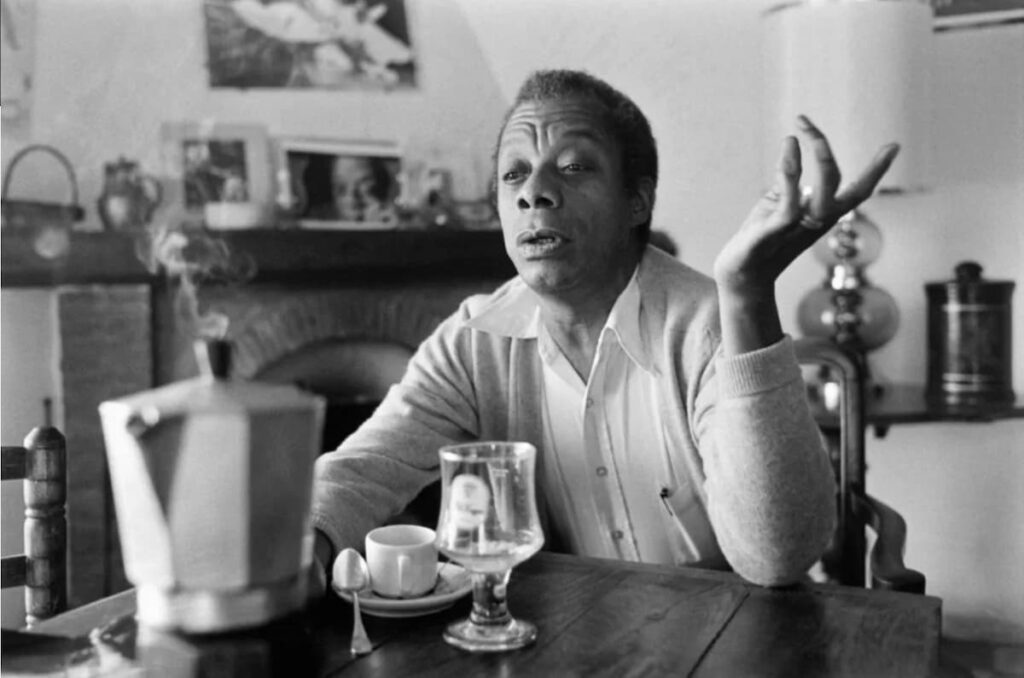
“Walk down the street of any city, any afternoon, and look around you. What you’ve got to remember is what you’re looking at is also you. Everyone you’re looking at is also you. You could be that person. You could be that monster, you could be that cop. And you have to decide, in yourself, not to be.”
James Baldwin
Meeting the Man: James Baldwin in Paris (1970)
James Baldwin saw the world he was told to believe in–a society who applauded over bowls of popcorn while gleefully watching John Wayne kill Native Americans across national movie theaters–but he also witnessed what was actually happening, and never looked away.
“My school really was the streets of New York City. My frame of reference was George Washington and John Wayne. But, I was a child, you know, and when a child puts his eyes in the world he has to use what he sees. There’s nothing else to use. And you are formed by what you see, the choices you have to make, and the way you discover what it means to be black in New York and then throughout the entire country. I know how you watch as you grow older, and it is not a figure of speech, the corpses of your brothers and your sisters pile up around you. And not for anything they have done. They were too young to have done anything. But what one does realize is that when you try to stand up and look the world in the face like you had a right to be here, you have attacked the entire power structure of the Western world.”
“Most of the white Americans I’ve ever encountered, really, you know, had a Negro friend, or a Negro maid, or somebody in high school, but they never, you know, or rarely, after school was over or whatever, came to my kitchen, you know. We were segregated from the schoolhouse door. … I’m sure they have nothing whatever against Negroes, but that’s really not the question, you know. The question is really a kind of apathy and ignorance, which is the price we pay for segregation. That’s what segregation means. You don’t know what’s happening on the other side of the wall, because you don’t want to know.
What you have to look at is what is happening in this country, and what is happening in this country, and what is really happening is that brother has murdered brother knowing it was his brother. White men have lynched Negroes knowing them to be their sons. White women have had Negroes burned knowing them to be their lovers. It is not a racial problem. It is a problem of whether or not you’re willing to look at your life and be responsible for it, and then begin to change it.”
James Baldwin speaking during ‘Baldwin’s N*gger,’ a 1969 documentary featuring lecture and discussion from Baldwin in London
“The Negro people have strongly and fully taken the bit in their teeth and are asking for absolutely no quarter from anyone. But I do say that the bulk of the interpretation of whether this thing is going to end successfully and joyously or is going to end disastrously lays very heavily with the white community, it lays very heavily with the profiteers, it lays very heavily with the vested interests, it lays very heavily with a great middle stream in this country of people who have refused to commit themselves or even have the slightest knowledge that these things have been going on.”
Harry Belafonte
Canada Public Broadcasting (CBC), 1967
It is inside this Nazi-created smoke cloud that we are forced to inhale before many of us realize how much of its poison we have choked and swallowed down. And it is this smokescreen and smog–that attempts to make itself invisible and accepted as nothing but the air–that we must work together to consciously remove from the routines of reality’s lying gaze.
It should give pause and rage to consider how much of the world was constructed in blood, by landlords, oil barons, and world leaders of a time that came before us, in glasses we don’t know we are wearing, which must be removed consciously, before any of us can look around and see anything.
“If we were white, if we were Irish, if we were Jewish, if we were Poles, if we had, in fact, in your mind a frame of reference our heroes would be your heroes, too. Nat Turner would be a hero for you instead of a threat. Malcom X might still be alive. Everyone is very proud of brave little Israel–against which I have nothing; I don’t want to be misinterpreted, I am not an anti-Semite. But, you know, when the Israelis pick up guns, or the Poles, or the Irish, or any white man in the world says “give me liberty, or give me death,” the entire white world applauds. When a black man says exactly the same thing, word for word, he is judged a criminal and treated like one and everything possible is done to make an example of this bad n*gger, so there won’t be any more like him.”
I don’t know whether the labor unions and their bosses really hate me–that doesn’t matter–but I know I’m not in their union. I don’t know whether the real estate lobby has anything against black people, but I know the real estate lobby is keeping me in the ghetto. I don’t know if the board of education hates black people, but I know the textbooks they give my children to read and the schools we have to go to. Now, this is the evidence. You want me to make an act of faith, risking myself, my wife, my woman, my sister, my children on some idealism which assure me exists in America, which I have never seen.”
James Baldwin
The Dick Cavett Show (1969)
In a letter sent to his nephew, published as ‘The Fire Next Time,’ Baldwin offers instructions on untangling our actual reality–the world we could all share–from the artificially-made world constructed in lies and violence from dishonest men seeking power through white supremacy.
Written on the 100th anniversary of the Emancipation Proclamation, Baldwin poetically explains how no one is truly free until we build hope and our new world together, as we are all underneath the smog of lies and control to some extent.
“I am writing this letter to you, to try to tell you something about how to handle them, for most of them do not yet really know that you exist. I know the conditions under which you were born, for I was there. Remember that: I know how black it looks today, for you. It looked bad that day, too, yes, we were trembling. We have not stopped trembling yet, but if we had not loved each other none of us would have survived. And now you must survive because we love you, and for the sake of your children and your children’s children.
This innocent country set you down in a ghetto in which, in fact, it intended that you should perish. Let me spell out precisely what I mean by that, for the heart of the matter is here, and the root of my dispute with my country. You were born where you were born and faced the future that you faced because you were black and for no other reason.
The limits of your ambition were, thus, expected to be set forever. You were born into a society which spelled out with brutal clarity, and in as many ways as possible, that you were a worthless human being. You were not expected to aspire to excellence: you were expected to make peace with mediocrity. Wherever you have turned, James, in your short time on this earth, you have been told where you could go and what you could do (and how you could do it) and where you could live and whom you could marry.
I know your countrymen do not agree with me about this, and I hear them saying, “You exaggerate,” they do not know Harlem, and I do. So do you. Take no one’s word for anything, including mine–but trust your experience. Know whence you came. If you know whence you came, there is really no limit to where you can go. The details and symbols of your life have been deliberately constructed to make you believe what white people say about you. Please try to remember that what they believe, as well as what they do and cause you to endure, does not testify to your inferiority but to their inhumanity and fear. Please try to be clear, dear James, through the storm which rages about your youthful head today, about the reality which lies behind the words acceptance and integration.There is no reason for you to try to become like white people and there is no basis whatever for their impertinent assumption that they must accept you. The really terrible thing, old buddy, is that you must accept them. And I mean that very seriously. You must accept them and accept them with love. For these innocent people have no other hope. They are, in effect, still trapped in a history which they do not understand; and until they understand it, they cannot be released from it. They had to believe for many years, and for innumerable reasons, that black men are inferior to white men.
Many of them, indeed, know better, but, as you will discover, people find it very difficult to act on what they know. To act is to be committed, and to be committed is to be in danger. In this case, the danger, in the minds of most white Americans, is the loss of their identity. Try to imagine how you would feel if you woke up one morning to find the sun shining and all the stars aflame. You would be frightened because it is out of the order of nature. Any upheaval in the universe is terrifying because it so profoundly attacks one’s sense of one’s own reality. Well, the black man has functioned in the white man’s world as a fixed star, as an immovable pillar: and as he moves out of his place, heaven and earth are shaken to their foundations. You, don’t be afraid. I said that it was intended that you should perish in the ghetto, perish by never being allowed to go behind the white man’s definitions, by never being allowed to spell out your proper name. You have, and many of us have, defeated this intention; and, by a terrible law, a terrible paradox, those innocents who believed that your imprisonment made them safe are losing their grasp on reality. But these men are your brothers–your lost, younger brothers. And if the word integration means anything, this is what it means: that we, with love, shall force our brothers to see themselves as they are, to cease fleeing from reality and begin to change it.
For this is your home, my friend, do not be driven from it; great men have done great things here, and will again, and we can make America what America must become. It will be hard, James, but you come from sturdy, peasant stock, men who picked cotton and damned rivers and built railroads, and, in the teeth of the most terrifying odds, achieved an unassailable and monumental dignity. You come from a long line of great poets, some of the greatest poets since Homer. One of them said, The very time I thought I was lost, My dungeon shook and my chains fell off.
You know, and I know, that the country is celebrating one hundred years of freedom one hundred years too soon. We cannot be free until they are free. God bless you, James, and Godspeed. Your uncle, James.”
James Baldwin
The Fire Next Time
None of us have ever lived in a world that was simply allowed to exist. It is from rulers who have stood on top of all of us that life has never happened without violence from those in power seeking to maintain their power.
It is from the constructs of Blackness and whiteness being created from lies, and it is inside these two artificially created constructs that we find America, and other rich nations claiming to be The West, claiming to be the most civilized while blocking all real people from living their authentic lives.
“Who taught you to hate the texture of your hair? Who taught you to hate the color of your skin to such extent that you bleach to get like the white man? Who taught you to hate the shape or your nose and the shape of your lips? Who taught you to hate yourself from the top of your head to the soles of your feet?”
Malcolm X
‘Who Taught You to Hate Yourself?’ speech (1962)
“I don’t believe in white people. I don’t believe in Black people either, for that matter. But I know the difference between being Black and white at this time. It means that I cannot fool myself about some things that I could fool myself about, if I were white.”
James Baldwin
Meeting the Man: James Baldwin in Paris (1970)
Things have largely continued, with history constantly becoming the future, patterns clearly visible for anyone willing to excavate the truths from the lies folded over what has already happened.
We can acknowledge that this takes an abundant amount of effort inside the metaphorical walls of a society currently ruled and trapped by white supremacy and violence, but it would be impossible to accept any white person’s claim of not knowing what’s going on.
Once a white person is aware of the prisons–built via brick, steel, and racist ideas–then these ideas which they know to be false–as they have always known in their hearts–must be interrogated and dealt with, regardless of any claimed–or feigned–discomfort.
Anything less would simply be no different than continuing the lies and death pushed forward by Gomes Zurara and Prince Henry of Portugal.
James Baldwin articulates the lies all white Americans must interrogate and question, and helps those of us who are already conscious–Black and white–to have an easier way of understanding how to approach their evil and ignorance wrapped up together.
“…white Americans have never, in all their long history, been able to look on him as a man like themselves. This point need not be labored; it is proved over and over again by the Negro’s continuing position here, and his indescribable struggle to defeat the stratagems that white Americans have used, and use, to deny him his humanity.”
White Americans have thought of it as their shame, and have envied those more civilized and elegant European nations that were untroubled by the presence of black men on their shores. This is because white Americans have supposed “Europe” and “civilization” to be synonyms–which they are not–and have been distrustful of other standards and other sources of vitality, especially those produced in America itself, and have attempted to behave in all matters as though what was east for Europe was also east for them.
Do I really want to be integrated into a burning house? White Americans find it as difficult as white people elsewhere do to divest themselves of the notion that they are in possession of some intrinsic value that black people need, or want. And this assumption–which, for example, makes the solution to the Negro problem depend on the speed with which Negores accept and adopt white standards–is revealed in all kinds of striking ways [.] It is the Negro, of course, who is presumed to have become equal–an achievement that not only proves the comforting fact that perseverance has no color but also overwhelmingly corroborates the white man’s sense of his own value.
White men, at the bottom of their hearts, know this. Therefore, a vast amount of the energy that goes into what we call the Negro problem is produced by the white man’s profound desire not to be judged by those who are not white, not to be seen as he is, and at the same time a vast amount of the white anguish is rooted in the white man’s equally profound need to be seen as he is, to be released from the tyranny of his mirror.
I am far from convinced that being released from the African witch doctor was worthwhile if I am now–in order to support the moral contradictions and the spiritual aridity of my life–expected to become dependent on the American psychiatrist. It is a bargain I refuse. The only thing white people have that black people need, or should want, is power–and no one holds power forever.
In short, we, the black and the white, deeply need each other here if we are really to become a nation–if we are really, that is, to achieve our identity, our maturity, as men and women . To create one nation has proved to be a hideously difficult task[.]
There is absolutely no reason to suppose that white people are better equipped to frame the laws by which I am to be governed than I am. It is entirely unacceptable that I should have no voice in the political affairs of my country, for I am not a ward of America; I am one of the first Americans to arrive on these shores.
This past, the Negro’s past, of rope, fire, torture, castration, infanticide, rape; death and humiliation; fear by day and night, fear as deep as the marrow of the bone; doubt that he was worthy of life, since everyone around him denied it; sorrow for his women, for his kinfolk, for his children, who needed his protection, and whom he could not protect; rage, hatred, and murder, hatred for white men so deep that it often turned against him and his own, and made all love, all trust, all joy impossible–this past, this endless struggle to achieve and reveal and confirm a human identity, human authority, yet contains, for all its horror, something very beautiful.”
James Baldwin
The Fire Next Time
Baldwin argues that even though the grief can be never ending, so can the love if we let it. He explains how it is precisely that life is difficult, and that changing our world into the empathetic and loving world we know is possible, that we should confront our fears–including death–which he believes is what stops so many people from ever being born as who they are.
Life and the human experience can be special, and that if we ask ourselves who we really are, outside of all the symbols–from the state, church, and otherwise–we have been handed, we can discover the world we so far have only seen in dreams, paintings, songs, and poems.
“Life is traffic simply because the earth turns and the sun inexorably rises and sets, and one day, for each of us, the sun will go down for the last, last time. Perhaps the whole root of our trouble, the human trouble, is that we will sacrifice all the beauty of our lives, will imprison ourselves in totems, taboos, crosses, blood sacrifices, steeples, mosques, races, armies, flags, nations, in order to deny the fact of death, which is the only fact we have. It seems to me that one ought to rejoice in the fact of death–ought to decide, indeed, to earn one’s death by confronting with passion the conundrum of life. One is responsible to life: It is the small beacon in that terrifying darkness from which we come and to which we shall return. One must negotiate this passage as nobly as possible, for the sake of those who are coming after us.”
James Baldwin
The Fire Next Time
America–and much of the world dealing with the same problems propagated largely from America–must look at what is happening in the daily lives of Black people, and listen to Black people when they say what is happening.
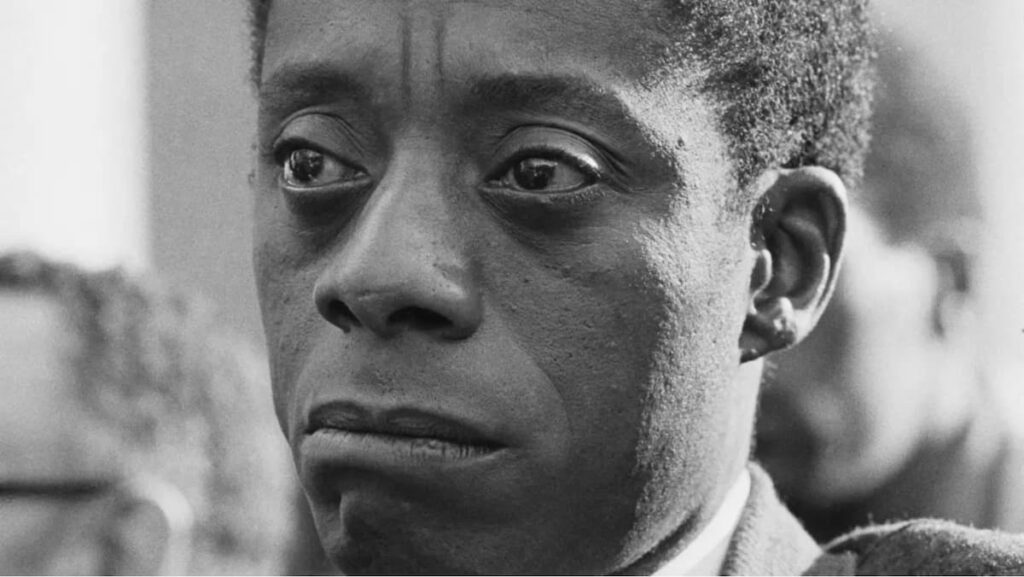
It is simultaneously disingenuous and unhelpful, as well as insulting, for white people to continue reacting in horror at police body cam footage when Black men are murdered on the streets and across social media feeds. If the tears were genuinely real from these white people, they would confront what they know to be true about their racist systems of power, instead of continuing to treat each death, every life sentence, and every eviction like isolated incidents.
“This nation is drawn to the spectacular. Drawn to the flames. But we don’t pay attention to the kindling, and the kindling are those policies that are predicated on anti-blackness. The denial of education, kindling. Unequal housing and employment opportunities, kindling. They hyper-policing of Black communities, kindling.”
Carol Anderson
Stamped from the Beginning
“When you have policies, structures, and institutions that intentionally subjugate Black people you intentionally create communities that can be continuously criminalized. And there’s that [kindling] thread again.”
Brittany Packnett Cunningham
Stamped from the Beginning
James Baldwin explains it is because of these lies, and because we know about them, that the West has no moral authority, no matter how much violence and hastily-passed laws are handed out while uttering “One Nation Under God.”
“All of the Western nations have been caught in a lie, the lie of their pretended humanism; this means that their history has no moral justification, and that the West has no moral authority.
It is true that political freedom is a matter of power and has nothing to do with morality; and if one had ever hoped to find a way around this principle, the performance of power at bay, which is the situation of the Western nations, and the very definition of the American crisis, has dashed this hope to pieces. Moreover, as habits of thought reinforce and sustain the habits of power, it is not even remotely possible for the excluded to become included, for this inclusion means, precisely, the end of the status quo–it would result, as so many of the wise and honored would put it, in a mongrelization of the races.
Power, then, which can have no morality in itself, is yet dependent on human energy, on the wills and desires of human beings. When power translates itself into tyranny, it means that the principles on which that power depended, and which were its justification, are bankrupt. When this happens, and it is happening now, power can only be defended by thugs and mediocrities–and seas of blood. The representatives of the status quo are sickened and divided, and dread looking into the eyes of their young[.]
“Many of my countrymen will not agree with me and will accuse me of special pleading. Neither they, nor I, can hope to come anywhere near the truth of the matter, so long as a man’s color exerts so powerful a force on his fate. In the long meantime, I can only say that the authority of my countrymen in these matters is not equal to my own, since I know what Black Americans endure–know it in my own flesh and spirit, know it by the human wreckage through which I have passed.
For it is a very different matter, and results in a very different intelligence, to grow up under the necessity of questioning everything–everything, from the question of one’s identity to the literal, brutal question of how to save one’s life in order to begin to live it.
White children, in the main, and whether they are rich or poor, grow up with a grasp of reality so feeble that they can very accurately be described as deluded–about themselves and the world they live in. White people have managed to get through entire lifetimes in this euphoric state, but Black people have not been so lucky: a black man who sees the world the way John Wayne, for example, sees it would not be an eccentric patriot, but a raving maniac. The reason for this, at bottom, is that the doctrine of white supremacy, which still controls most white people, is itself a stupendous delusion: but to be born black in America is an immediate, a mortal challenge. People who cling to their delusions find it difficult, if not impossible, to learn anything worth learning: a people under the necessity of creating themselves must examine everything, and soak up learning the way the roots of a tree soak up water. A people still held in bondage must believe that Ye shall know the truth, and the truth shall make ye free.
But, of course, what black people are also learning as they learn is the truth about white people: and that’s the rub. Actually, black people have known the truth about white people for a long time, but now there is no longer any way for the truth to be hidden. The whole world knows it. The truth which frees black people will also free white people, but this is a truth which white people find very difficult to swallow.
Americans will, of course, deny, with horror, that they are dreaming of anything like “the final solution” – those Americans, that is, who are likely to be asked: what goes on in the great, vast, private hinterland of the American heart can only be guessed at by observing the way the country goes these days.
Black men have been burned alive in this country more than once–many men now living have seen it with their own eyes; black men and boys are being murdered here today, in cold blood, and with impunity; and it is a very serious matter when the government which is sworn to protect the interests of all American citizens publicly and unabashedly allies itself with the enemies of black men.
Now, in the interest of the public peace, it is the Black Panthers who are being murdered in their beds, by the dutiful and zealous police. But, for a policeman, all black men, especially young black men, are probably Black Panthers and all black women and children are probably allied with them: just as, in a Vietnamese village, the entire population, men, women, children, are considered as probable Vietcong. In the village, as in the ghetto, those who were not dangerous before the search-and-destroy operations assuredly become so afterward, for the inhabitants of the village, like the inhabitants of the ghetto, realize that they are identified, judged, menaced, murdered, solely because of the color of their skin. This is as curious a way of waging a war for a people’s freedom as it is of maintaining domestic public peace.
When the black man’s mind is no longer controlled by the white man’s fantasies, a new balance or what may be described as an unprecedented inequality begins to make itself felt: for the white man no longer knows them both. For if it is difficult to be released from the stigma of blackness, it is clearly at least equally difficult to surmount the delusion of whiteness. And as the black glories in his newfound color, which is his at last, and asserts, not always with the very greatest politeness, the answerable validity and power of his being–even in the shadow of death–the white is very often affronted and very often made afraid. He has his reasons, after all, not only for being weary of the entire concept of color, but fearful as to what may be made of this concept once it has fallen, as it were, into the wrong hands. And one may indeed be wary, but the point is that it was inevitable that black and white should arrive at this dizzying height of tension. Only when we have passed this moment will we know what our history has made of us.
Whoever is part of whatever civilization helplessly loves some aspects of it, and some of the people in it. A person does not lightly elect to oppose his society. One would much rather be at home among one’s compatriots than be mocked and detested by them. And there is a level on which the mockery of the people, even their hatred, is moving because it is so blind: it is terrible to watch people cling to their captivity and insist on their own destruction. I think black people have always felt this about America, and Americans, and have always seen, spinning above the thoughtless American head, the shape of the wrath to come.”
James Baldwin
The Fire Next Time
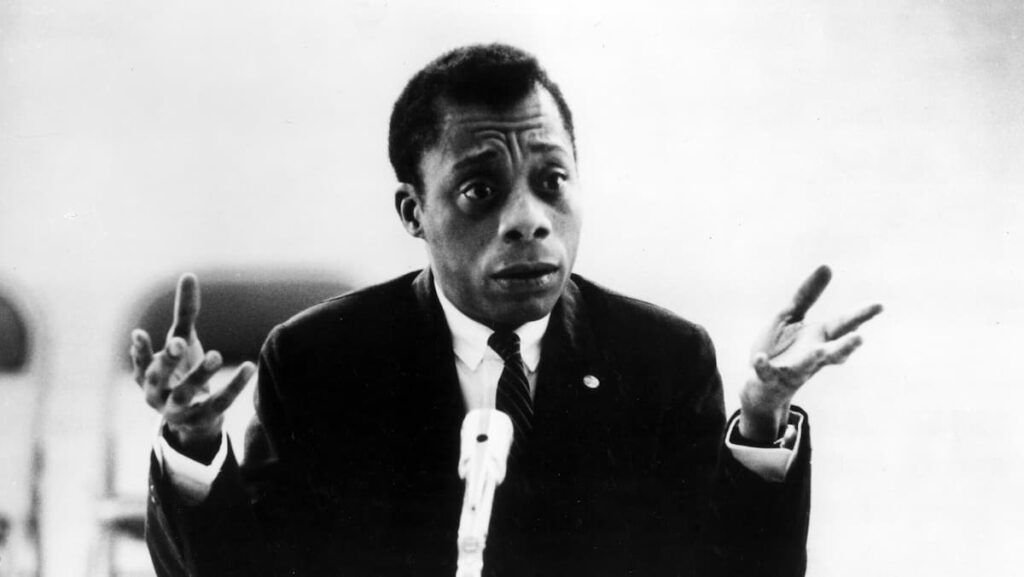
The conversation around racism is one that hasn’t really taken place yet. Any time Black people attempt to partake in this conversation, the response is always violence–often at the hands of the state.
America will never untangle itself from its identity of violence, fear, and racism until the country holds itself accountable for the white supremacist lies that have guided society since Thomas Jefferson declared “Liberty for all” while owning more slaves than any other president.
It is a conversation Black people keep asking to have in good faith, while white allies stand in the way and offer half-measures, and those in power continue to build metaphorical and brick prisons.
“When we think of the history of racism in this country, we’re really thinking of the history of power.”
Dr. Ibram X. Kendi
Stamped from the Beginning
“The work that ought to have been done in the immediate aftermath of slavery, the work of reorganizing, retooling, re-conceptualizing the entire society, so that it might be possible for previously enslaved individuals to be free and equal, that work was never done.”
Dr. Angela Davis
Stamped from the Beginning
“The heartbeat of being racist is denial, is constantly looking for ways to deny the persistence of racism.”
Dr. Ibram X. Kendi
Stamped from the Beginning
“This is not just a matter of values, it’s also a matter of national survival. We have no choice. If we teach our children to hate America, there will be no one left to defend our flag, or to protect our great country or its freedom.”
Donald Trump, rebuking critical race theory to his supporters at a rally (2022)
“Trump is the fire this time. It’s come. It’s here. Neo-fascism is unfolding right under our very eyes, undermining sources, undermining sources of opposition, be it press, be it courts, be it university… feeling as if it’s inevitable that you have to move in a right-wing, populist, xenophobic, nationalist, neo-fascist direction. That’s the fire this time.“
[On being asked what his college students are hearing in James Baldwin today] “They’re hearing someone who refused to allow his fire to be dampened by overwhelming bleakness and darkness, and that’s a beautiful thing“
Dr. Cornell West (2017)
In the final pages of ‘The Fire Next Time,’ Baldwin offers a message of hope that must be taken to heart, because until the fire is gone, we are all in danger. The future can be beautiful instead of history always repeating, if we work to change our shared world.
“If we–and now I mean the relatively conscious whites and the relatively conscious blacks, who must, like lovers, insist on, or create, the consciousness of the others–do not falter in our duty now, we may be able, handful that we are, to end the racial nightmare, and achieve our country, and change the history of the world. If we do not now dare everything, the fulfillment of that prophecy, re-created from the Bible in song by a slave, is upon us: God gave Noah the rainbow sign, No more water, the fire next time!”
I just had a similar epiphany about death recently so reading James Baldwin’s words from so long ago felt like one of those cosmic coincidences that leave me wondering about god and fate. I will absolutely be sharing this article with all my friends, incredible work as always! 🩵
Decades later, the struggle goes on. Beautiful work continues. May God open our hearts.
Enjoy every single day