

 Juno Rylee Schultz
“ ’Yeah, let’s not be grunge. Let’s be more like the Beach Boys. But loud.’ ”
GIRL MUSIC is independent music journalism for anyone that loves pretty art and music.
» Consider buying me breakfast or coffee on Ko-Fi/PayPal, or leaving me a small tip on Venmo.
« Contact me at juno.stump@gmail.com if you need someone with experience in mock reviews, copy editing/writing, PR work, etc »

Words, research, and edits: Juno Rylee Schultz (she/her)
Research: Kylie Tuinier (she/her)
Edits: Bex Stump (she/her), Kylie Tuinier (she/her), and Nathan Thatcher-Miller (he/him)
Original Art: Natou Delatour (she/they/it)
“I think I had two stories in my head. One was we’re gonna sell a hundred copies and that’s it. I’m gonna have to go back and work at Tower Records, or whatever. But the other one was like, ‘Man, this album feels so powerful, so moving and special to me. I think we’re gonna find a big audience, and this is gonna be an important record.’”
— Rivers Cuomo, CBS News, 2024
“Rock bands were getting more and more outrageous with tattoos and piercings. We came out completely clean-cut, four guys standing in a line, singing songs in major keys, about girls or whatever. It didn’t quite make sense how that was the next step for rock and roll.”
— Rivers Cuomo, CBS News, 2024
“If you really want to understand the Blue Album — not just the illusion of the Blue Album that we sold — you have to take it in the context of what happened right before it, which is that I moved to L.A. from Connecticut after high school with the intention of making it with my heavy metal band.”
— Rivers Cuomo, Los Angeles Times, 2024
“The other far-hipper employees at Tower Records kind of educated me. I remember they played ‘Sliver’ for me [by Nirvana], and I was immediately in love. It had the aggression that I needed from my upbringing as a metalhead, but paired with strong, major-key chord progressions and catchy, emotional melodies and lyrics that felt so nostalgic and sweet and painful. It just sounded like it was coming from the deepest part inside of me — a part which I hadn’t yet been able to come close to articulating in my own music.”
— Rivers Cuomo, American Songwriter, 2024
“It’s like, ‘Oh, my God. This is so beautiful to me. And I identify with it so much.’ Hearing [Kurt Cobain] sing about Mom and Dad and Grandpa Joe, these personal family issues, in a really heartbreaking kind of innocent, childlike way, over these straightforward chords in a major key.”— Rivers Cuomo, GRAMMY, 2024
“When we made the ‘Blue’ album, I saw myself in a completely different light. I thought we were going to be the next Nirvana, that we were going to be taken very seriously as an angst-filled rock band. And I was completely shocked and surprised and disappointed when we put the record out to find that the press story was: ‘This is a band of geeks.’ That story had never occurred to me. But it was universal around the world, that’s what everyone said about us. So I guess it must be true. I just don’t fit in and I don’t even realize it. Put me in the wider society and I stand out as a misfit.”
— Rivers Cuomo, Louder Sound, 2024
“I got their [demo] tapes from Geffen Records when I was out in LA working on another project. I listened to it in the car and just thought it was phenomenal. Having no idea what they looked like, I thought they were a heavy metal band that had really good melodies.”
— Ric Ocasek (late producer, front man of The Cars, and producer of Weezer’s Blue Album), Phawker, 2018
Rivers Cuomo grew up with kaleidoscopic dreams, obsessing over rock music, pop melodies, and which strings to strum to make his way to the stage he’d been thinking about since he was five years old.
It was 1976, and Rivers’ life was primarily centered around taking care of horses, doing yoga and stretching, and learning from the adults around him.
Cuomo’s life was filled with structure, nurturing, and peace, until a girl visiting the ashram Rivers lived on played ‘Rock and Roll All Over’ by the rock band KISS. After she left, everything changed.
Growing up on an ashram, Rivers had no music to speak of outside of “hippie music” — Joan Baez, Cat Stevens, Bob Dylan — and “Sanskrit chants,” as Cuomo described it on a podcast with Questlove in March 2024.
This chaos and release of energy and noise, with confusing and melted-looking faces on the front of the LP, changed everything for Rivers. And soon, the rest of the world.
“When I was five or so, my family moved to an ashram. We were pretty cut off from pop culture at that point. There was a lot of Sanskrit chanting. That was my main music experience at that point. There was some hippie music too. I remember like, Cat Stevens and Joan Baez. I would hear those records. But then there was this one girl who was my age. She came and visited the Ashram. Her name was Shanti, and she had Rock and Roll Over by Kiss, so it was probably ’77. She accidentally left it. We put it on the record player. We had like a little cassette player also, so we pressed record, as the record was going, and so then I had a recording of this record. That’s the only KISS album I had at that point. It’s really the only kind of rock or intense music that I had. But we would listen to it over and over. But it had the sound of my brother and I, running around the coffee table in circles, over and over, for hours together. So that’s what I listened to for a few years.”
— Rivers Cuomo, Questlove Supreme, 2024
Rivers was too young and removed from everything in the world to understand anything about the music he was hearing, but the energy, the feeling, and the quiet notion of knowing he could somehow do the same thing stuck with him.
“My parents were Buddhists, they were part of the Rochester Zen Center, which is one of the very first centers for Buddhism in the United States. It was a very rural and agrarian environment. I had chores like feeding ponies, clearing weeds and gardening, cooking and cleaning. Yoga, meditation practice everyday, and then some traditional academics, and a lot of self-lead creative projects. I couldn’t imagine a more nurturing, safe and supportive environment for a kid to grow up in. Years later when my brother and I went to public school, we had to teach ourselves how to swear and talk shit so we could fit in better.”
— Rivers Cuomo, Phawker, 2018
By the time Rivers Cuomo was twenty, he was on his way to Los Angeles with dreams firmly gripped in hand to make it as a rock star. At this point in his life, Rivers was obsessed with metal music, shredding guitar, and had long, unkempt hair.
“I came to L.A. to be a shredder.”
— Rivers Cuomo, Questlove Supreme, 2024
He was in a band called Avant Garde with a few friends and working at Tower Records, where he learned about music and begged his co-workers to listen to his band.
Rivers Cuomo recalls his time working at Tower Records in an oral history of Weezer in 2018:
“I got a job working with Pat Finn at Tower Records on Sunset Boulevard. He had a shaved head and he was cool and punk, and I was trying to get him into my band, which was called Avant Garde. He listened to our tape and said, ‘This is terrible — I’m never gonna be in this band.’
I wasn’t the singer in Avant Garde. I thought of myself as an inferior singer to the people who were singing in my bands before me — they had bigger ranges and more nimble voices. But Pat Finn was like, ‘Go write your own songs and sing them yourself.’”
He said, “I don’t care if you think you’re not a singer. That’s gonna be a much better version of what you can do.”
This advice would prove instrumental to Rivers, just like the other information and advice he absorbed while working at Tower Records from early 1990 through mid-1991.
“The other people were a few years older, which meant a lot at the time. And they had a much broader knowledge of music and alternative music at the time. Working there was a real education. I got exposed to all different kinds of music and slowly my own style evolved from being a Metallica cover band to what you hear on the Blue Album.”
— Rivers Cuomo, Questlove Supreme, 2024
Rivers was from rural Connecticut, equipped with only his love of melodies from Brian Wilson and The Beach Boys, and his affliction with the attitude and crunch of metal.
It was because of his exposure to everything happening while working at Tower Records that Rivers was able to discover Nirvana, The Pixies, and Sonic Youth — music that was at the time still in isolation, incubating in regional pockets and concerts.
It was Nirvana’s ‘Sliver,’ released as a single by Sub Pop Records in 1990, that solidified what Rivers truly wanted his music to sound like — it was the last missing piece before Rivers and original-and-still-hitting drummer Pat Wilson stumbled onto the sound of Weezer.
“It’s funny, but Rivers worshipped KISS growing up, but KISS was the exact opposite of what I liked. Rivers met Gene Simmons once; Gene took him aside and apparently said, “Listen — fuck your fans.” [Laughs] I think it was his way of advising us to forge our own path and please yourself.”
— Pat Wilson, Billboard, 2019
Rivers and Pat had one more band before arriving on the major key change that was Weezer.
As Rivers explains it when looking back on the life of Weezer on Questlove Supreme in 2024:
“Our band [before Weezer] was called Fuzz… much more blues-based, and a little more active riff-wise. Vocally, I was trying to sing with a scratchy type of voice, which I’m not at all suited to sing like. I guess more in the Black Sabbath tradition. More swearing, abstract and impressionist [lyrics]. Very inspired by Jane’s Addiction.”
Fuzz didn’t work out, or last.
“It was rad.”
— Pat Wilson
“Yeah… [Laughs] ish.” — Rivers Cuomo, Questlove Supreme, 2024
Fuzz quickly became 60 Wrong Sausages, with Pat Finn (Cuomo’s co-worker at Tower Records) on bass and Finn’s friend Jason Cropper on guitar.
60 Wrong Sausages would only play a single gig — in November 1991 — before breaking up.
The big shift came after Rivers and Pat spent a year trying something completely different: songs written in a major key, songs that used common chords, and songs with Rivers singing in a “normal” voice.
Rivers didn’t want to officially and fully start rehearsals for the band until he’d put 50 songs together. He was anxious about being perceived as a poser, about his image shifting into what his interests actually were during a time when scene politics was especially brutal for artists.
It might sound paranoid in the context of the digital age, with fewer barriers between genres and regions, but in 1992, the idea of someone finding out that Rivers had gone from wanting a metal band in 1991 to a melody-hooked alternative band in 1992 was mortifying.
“I wanted to create a body of work before I put my next band together. There was so much anxiety about authenticity at the time, and we’d all just made this radical transformation from being metalheads to being alternative. You didn’t want anyone to find out what you looked like 12 months ago.”
— Rivers Cuomo, Phawker, 2018
This is around the time that Matt Sharp was pulled into the picture, as Pat Wilson recalls in a 2018 oral history:
“Rivers said we wouldn’t rehearse until we had 50 songs. We got pretty close, but then we didn’t have anyone else to play with. I’m like, “I know a guy who plays bass.” Matt [Sharp] and I had worked at California Tan on the 12th floor of the Monty’s building in Westwood. They sold products to tanning salons, and Matt was singularly focused on getting clients to buy a poster that explained the California Tan system. By this point, Matt had moved up to the Bay Area, but I told him he should come back down and play with us. Rivers was like, “It’s not that simple,” and I was like, “Everything’s that simple.””
To make the move irresistible, Wilson sent a cassette tape containing demos from Cuomo performing ‘Undone (The Sweater Song)’ and ‘The World Has Turned and Left Me Here’—both pivotal tracks from the Blue Album.
This was before Rivers, Pat, or anyone had conceived of anything resembling an album. At this point, it was still a couple of guys trying to figure out if they believed they could make something beautiful together.
Rivers Cuomo and Matt Sharp both recall this being a time where optimism and belief was swelling within the group of musicians:
“It was the first time someone I knew created something where I thought, my God — this is something I’d listen to even if I didn’t know them.”
“When Matt heard it, it was like a light bulb went on. He saw that this could actually work, so he moved down and was very, very aggressive about joining the band and getting the ball rolling. He found a house with a garage we could set up as a rehearsal space. At first they rejected us, but Matt talked the owners into it with his sales talent. We all got our dads to co-sign the lease.”
— Matt Sharp and Rivers Cuomo, Phawker, 2018
Jason Cropper joined as well, rounding out the up-and-coming rock band into an even four.
The first official rehearsal took place on Valentine’s Day 1992, and a month later, the band performed for the first time at Raji’s on Hollywood Boulevard, making their official debut as Weezer.
“It wasn’t until maybe two months into regularly rehearsing with those four guys in the garage that the sound started coming together. We cast aside some of the bluesy, grungier rock stuff, and focused more on major keys and beautiful chord progressions. I started singing more like I did in choir growing up, rather than trying to be Kurt Cobain. I kept harassing this guy Casey at [the now defunct club] Raji’s in Hollywood to give us a gig. Finally, one day he called and said, ‘The opening band for Keanu Reeves’ band Dogstar just canceled, do you guys wanna play?’ I said, ‘YES!’ And so he said, ‘What are you guys called?’ We didn’t have a name yet so I told him we were called Weezer, which was my dad’s nickname for me.
When I told the guys, ‘Hey, guess what, we’re called Weezer,’ they weren’t super excited about it.”
— Rivers Cuomo, Phawker, 2018
Also performing that night was Dogstar, Keanu Reeves’s band, and the place was packed.
Most of the crowd had dissipated by the time Weezer took the stage at 1 AM, with less than ten people remaining, but Weezer still put on their best show.
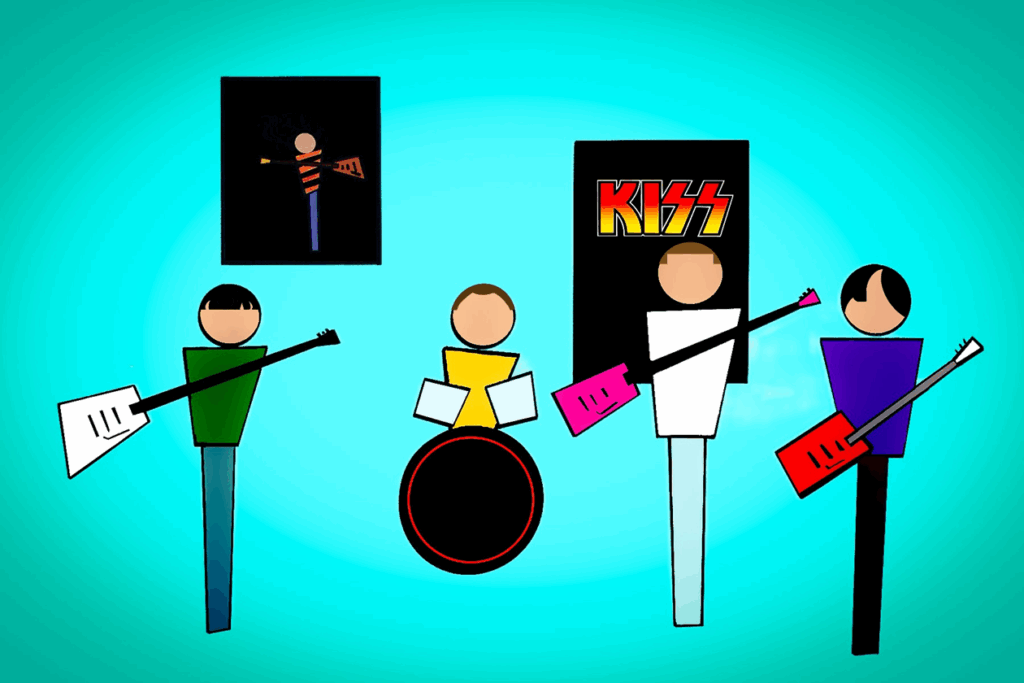
It would continue like this for the next few months, with Weezer gigging at the same few clubs — Club Lingerie, Coconut Teaszer, the Central — to the same group of less than ten people.
It began to feel discouraging, especially since Rivers believed they were playing good music. Cuomo essentially gave the band and Matt Sharp an ultimatum: “Get us a record deal in nine months, or I’m going to school for a college degree.”
“I remember sitting in the Weezer house one day playing an Avant Garde song called “Renaissance.” I still loved the chords — they were so emotional. So I wrote some new lyrics over it, and that was ‘Say It Ain’t So.'”
— Rivers Cuomo, recalling the story of Weezer in a 2018 oral history
In November 1992, Weezer recorded a demo that included ‘Say It Ain’t So’ and ‘Undone (The Sweater Song).’
Every label and A&R executive who heard the tape passed on it, except for Todd Sullivan at DGC, the alternative rock subsidiary of Geffen Records.
DGC and Geffen were a little more hip to everything happening. It was part of the reason they’d signed bands like Sonic Youth and Nirvana — to get closer to the underground alternative music scene rising up within the music world.
“They weren’t a tremendous live band by any means. But there was this feeling that they had their blinders on and they knew what they were going for. And the songs — I mean, “Say It Ain’t So” was incredible. I could kind of connect the dots.”
— Todd Sullivan
Things started moving quickly for Weezer once their demo was in the hands of representatives at DGC and Geffen.
Weezer signed with DGC in June 1993 and immediately began constructing a plan for the band’s first album. Having heard horror stories from other bands, Rivers and the group were firmly against working with engineers and producers.
Todd Sullivan explained that going without a producer wasn’t an option, though, with it being the band’s first album on a major label. From the label’s point of view, these were four kids who’d never been inside a studio before, and it was a lot of money being spent.
As Rivers Cuomo explains it, the choice for the band’s producer quickly became clear though, even if the band wasn’t keen on the idea at first:
“The record company was very insistent: ‘First record, you need a producer. Second record, we can talk.’
So I had that in my mind, and then I was in the grocery store and I heard ‘Just What I Needed’ by The Cars come on over the PA.
I was like, ‘That sounds like Weezer — let’s get that guy.’
I didn’t know who that guy was.”
The producer for the music Rivers had heard from The Cars was none other than Ric Ocasek — the singer, songwriter, and guitarist for The Cars.
Geffen/DGC were thrilled with the decision and sent Weezer’s demo tape out to Ric Ocasek immediately.
“I thought Ric would be a great idea because he’d produced some edgier bands that were coming out of left field. I sent Ric the demo and he responded immediately, kind of freaking out about the songs.”
— Todd Sullivan, 2018
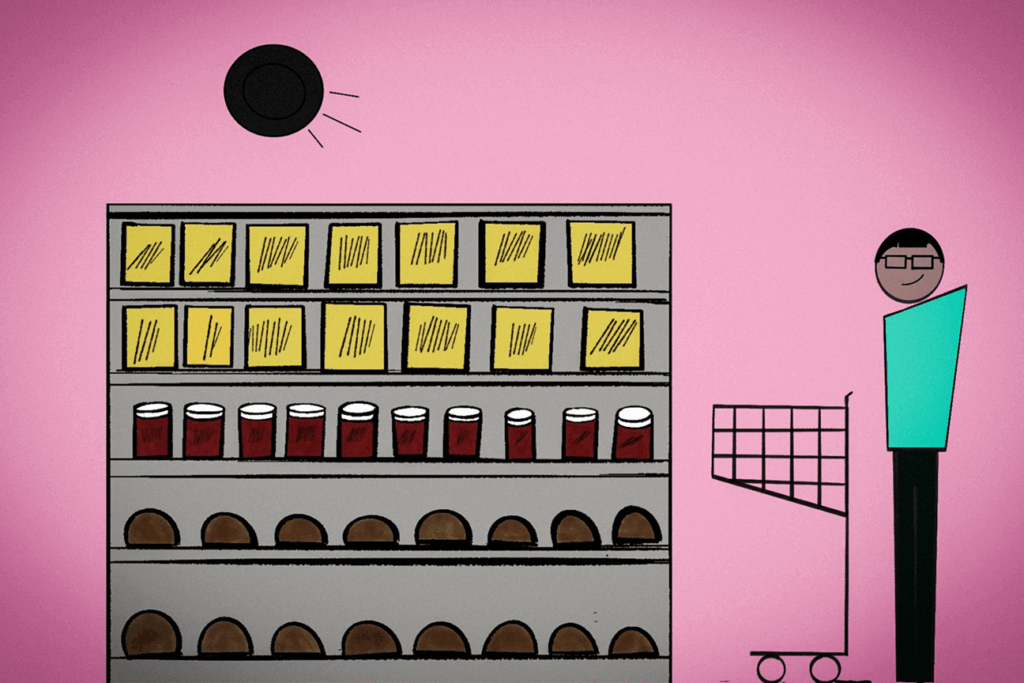
“I got their demo tapes from Geffen Records when I was out in LA working on another project. I listened to it in the car and thought it was phenomenal. Having no idea what they looked like, I thought they were a heavy metal band that had really good melodies.”
— Ric Ocasek, producer of Weezer’s Blue Album, 2018
Ocasek’s wife was pregnant with the couple’s first child at the time, and so the producer and musician asked the members of Weezer if they would travel to where he was located in New York to record the album at Electric Lady Studio.
The band stayed at the Gramercy Park Hotel, but none of them partied, instead remaining focused, as Pat Wilson recalled in 2018.
“I didn’t party between the ages of 20 and 30. So Matt and I stayed in. We were roommates, and I distinctly remember watching the first episode of Conan O’Brien’s show together. At the end, we were like, ‘He just has to work on his shit a little bit and he’ll be great.'”
Ocasek’s goal was to attempt to capture the same sound he’d heard on Weezer’s four-song demo but with the fidelity and space of a proper studio.
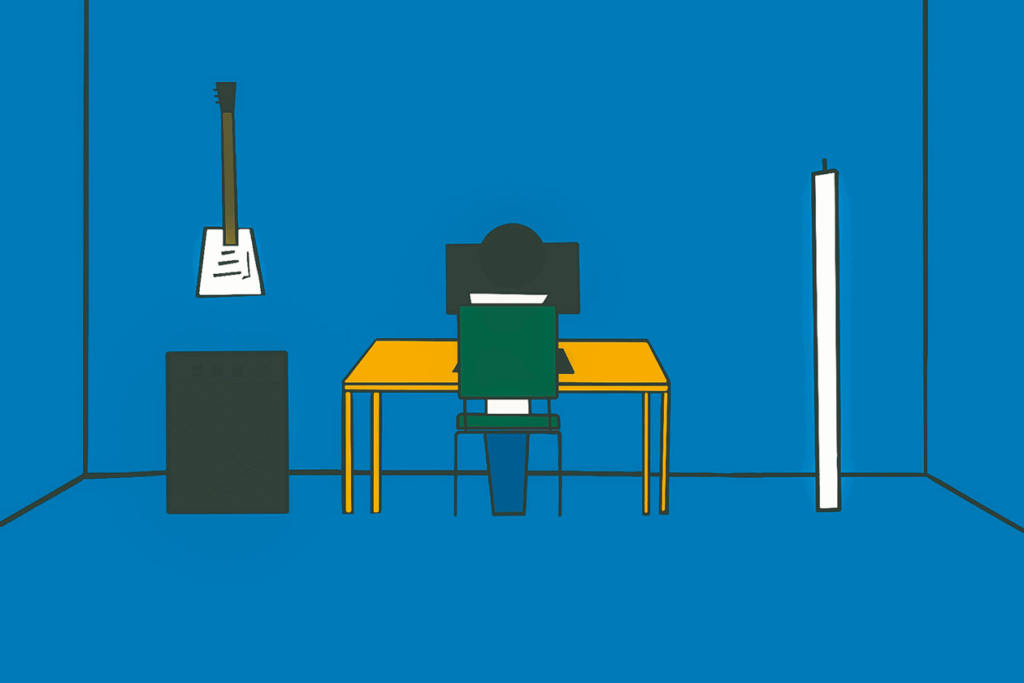
“I was in the studio at least 12 hours a day — mostly in a dark room by myself.”
— Rivers Cuomo, 2018
The band may have been fresh and inexperienced in the studio, but they were focused and dedicated to learning as much as possible from Ric Ocasek, who was “a guiding hand,” according to Todd Sullivan.
In 2024, while speaking with The Los Angeles Times, Cuomo recalled how Ocasek sat in a big chair “with his knees folded up to his chest, like a giant stork” while “constantly doodling these amazing psychedelic doodles” when Weezer was recording the Blue Album.
Rivers has stated how there was a conscious homage to The Beach Boys’ ‘In My Room’ when writing ‘In the Garage,’ with Pet Sounds being a major inspiration on Weezer and the Blue Album as a whole.
Another bonus of working with Ocasek was that Rivers gained access to his guitar collection.
Three guitars that we know were used, according to Guitar.com, were “a red 1960s Fender Jaguar, a red Gibson Les Paul Junior Special double cutaway, and a yellow Les Paul Junior Special.”
This was also where Rivers cemented his approach to guitar tones and effects — or rather, the lack thereof. This minimalist approach, developed with Ocasek’s help, has continued throughout his career.
“The only effects on guitar I think are on ‘Only In Dreams’ – there’s a little bit of delay on the swells but apart from that I was very anti-effects.”
— Rivers Cuomo, Guitar.com, 2023
Things went smooth musically during the production of the Blue Album, but there was certainly tension within the band, which came to a head near the end of recording and caught the attention of Ocasek and Sullivan.
“The last day of recording Rivers called me up and said, ‘Jason’s not going to be in the band anymore so I have to re-do all his parts.’ I said, ‘Why don’t you just keep the guitar tracks you got because it’s done.’ And he said, ‘No, I have to do all his parts over again, don’t worry it won’t take too long.’ So I said, ‘OK OK.’ We went back and he did all the guitar parts in one day. And they were perfect.”
— Ric Ocasek, 2018
“I knew how the songs went.”
— Rivers Cuomo, 2018
“I think it was Rivers who called me, which was maybe a little odd, because normally it would’ve been Matt. He said, ‘We want to make a change on guitar.’ For me, it was a panic, because I’m still a young A&R guy. How do I let the label know about this? Are we gonna have to re-record the whole record?”
— Todd Sullivan, 2018
As Cuomo and Wilson recalled later in 2018, it felt inevitable, and like Weezer had already done spiritually at that point anyway:
“In our minds — these were mainly conversations between me and Matt — we felt like if this was gonna happen eventually, we wanted it to happen before the band was presented to the public. That way the fans would never have to deal with any kind of breakup. We all came from broken homes, and we wanted things to be very stable for the audience.”
— Rivers Cuomo
“It was strangely anticlimactic. Really, we could have just been a trio at that point.”
— Pat Wilson
The record label quickly flew in the replacement second guitarist, to finish vocal harmonies and final mixing on the album.
Brian Bell recalls his memory of Weezer before he joined, and how he joined the band in a 2018 oral history:
“Ironically, Jason Cropper gave me a Weezer flier at Club Lingerie. My girlfriend at the time and I went to see them at the Coconut Teaszer. I wasn’t super-impressed, but when they got to ‘Say It Ain’t So,’ I was like, ‘This is a cover, right? There’s no way a local band could write a song this good.’
I kind of played it cool when they first asked me, like a girl that you really want to go out with, you don’t call her back right away. I played that game. I played them pretty hard. They left a message and I didn’t call them back right away. They call me up and the first question Rivers asks is what is my favorite Star Wars character. I thought of the most obscure character I could, which was Hammerhead. I also knew that Rivers loves Kiss; I could care less for Kiss, but I totally lied and said I was way into Kiss.
[Geffen/DGC] sent me a plane ticket and I took the redeye, so I get there at like 5:30 AM. I went straight to the Gramercy Park Hotel, and Rivers answered the door, and he had a horrible mustache. He said, ‘Welcome to the band. Oh by the way you’ll have to grow a mustache.’ Rivers said, ‘Here’s the floor, get some sleep.’ So I slept on the floor the first night. Pat came in and said, ‘Hey,’ then he turns around and moons me.”
“Brian claims that when I met him, I dropped my pants. I don’t have a strong recollection of that, but I’m not ruling it out. It sounds like something I’d do.”
— Pat Wilson, 2018
Once they finished mixing the Blue Album, Weezer traveled back to Los Angeles to break in Brian Bell as the band’s new second guitarist.
It was October 1993, and Todd Sullivan sent a memo to the record company titled “Weezer Tours the Bowels of L.A.”
Weezer would embark on about a dozen shows in two weeks in what the band would call “The Punishment Tour” to prepare themselves for wider touring and the upcoming release of the band’s debut album.
It was rough at first, but it got easier as the band became more confident.
By early 1994, Rivers had even enrolled himself in a few music classes at Los Angeles Valley College, using the last of his money from the cash advance Geffen had given him.
The rest of the band stayed busy with their day jobs while waiting for Geffen/DGC to release the album.
Geffen/DGC hired Peter Gowland to create the cover art for the Blue Album, with the four band members standing against a blue background. According to Bell, the band spent two days searching for the right shade of blue.
As Spike Jonze, the guy who’d go on to direct Weezer’s music videos, put it so succinctly in 2018: “They looked like people I would’ve hung out with in high school.”
The Blue Album was released on May 10, 1994, and much of the press was calling Weezer a “manufactured band” as they believed the group had popped up out of nowhere.
What they were so quickly forgetting was all the work that went into the Blue Album: the metal riffs of Avant Garde, learning as a wallflower at Tower Records, the bluesy riffs and pentatonic scales of Fuzz, and all the other incremental steps it had taken to get this far.
Weezer’s debut may have sounded fresh, crisp, and polished — unlike anything else on the radio at the time — but it was still the result of careful, meticulous work.
It was difficult for Rivers and his band members, as Cuomo described it when looking back in 2018:
“Somebody called us Stone Temple Pixies, which touched a nerve. To us, the music sounded amazing, so to have it dismissed like that was painful.”
‘Undone (The Sweater Song)’ would quickly lift the band’s profile, though, with the track taking off on college radio stations before spreading like wildfire across rock stations, including KROQ-FM in L.A. and 107.7 The End in Seattle.
As Kevin Weatherly, program director at KROQ, articulated in 2018: “‘Undone (The Sweater Song)’ cut through because it was so different from everything else at the time. This was the height of grunge, and then along comes Weezer with this nerdy little pop-punk ditty.”
The next component for Weezer’s meteoric rise would come from Spike Jonze, the band’s music videos, and MTV.
Weezer kept receiving video treatments, but no one in the band really had any interest — that is, until Spike Jonze reminded them of what was possible and how simple it could all be.
“Rivers didn’t like the idea [of music videos]— he felt it was contrived. So we talked, and I told him, ‘Look, a music video can be anything. It doesn’t have to be what you think it is. It could be as perfect and simple as your album cover — just you guys playing against a blue wall, singing or half-singing or not singing at all.’ He goes, ‘But then what happens?’ And I’m like, ‘I don’t know — a bunch of dogs run through at the end?’ I wasn’t pitching an idea as much as I was just saying that he could make anything out of it.”
— Spike Jonze, 2018
The video was completed in a single day of shooting at a studio in Silver Lake. The take used was one of the last shots, and it’s done in one sweeping cut.
It was simple and beautiful, just like the music of the Blue Album.
And it had dogs.
“We did a couple takes where they lip-synched all the way through. But I think we were more interested in just fucking around. I was surprised by how compelling Rivers was. Even though I’d seen them live, I didn’t know he’d be so aware of the camera and how to play with it.”
— Spike Jonze, 2018
It was an obvious choice to continue working with Jonze for the next video.
For ‘Buddy Holly,’ Jonze could just see the band playing in the diner in his head, and so he brought the idea to the band.
They all loved the idea.
“Spike pitched it, and we were like, ‘Oh my God, the Fonz is gonna be dancing in our video.’ It just blew our minds.”
— Rivers Cuomo, 2018
“The thing that I remember the most about the ‘Buddy Holly’ video was they had trouble getting all the Happy Days actors to sign off on letting us use their image in the footage we used. So we had to get Joanie’s release and Potsie’s release etc. They were apprehensive at first, but when The Fonz said, ‘I’m in,’ everyone else said, ‘If the Fonz says it’s cool, it’s cool.'”
— Matt Sharp, 2018
“The best thing about that video is that there’s no CGI going on. It’s all just clever camera work. And clever editing. I get to the point at the Fonz and he goes, ‘Ayyy.’ I mean, come on. I loved Happy Days as a kid. It doesn’t get any cooler than that.”
— Pat Wilson, 2018
‘Undone (The Sweater Song)’ hooked viewers on MTV, but the video for ‘Buddy Holly’ won ‘Best Breakthrough Video’ at the 1994 MTV Video Music Awards.
‘Buddy Holly’ hit #2 on Billboard’s Alternative Rock radio chart in mid-December before 1994 was through, but everything culminated with Weezer playing an acoustic Christmas set for KROQ with Henry Winkler joining them onstage.
Weezer began touring in Europe for the first time in February 1995, right as the Blue Album hit #16 on the Billboard 200.
This was also as Weezer was putting together a music video for the album’s third and final single, ‘Say It Ain’t So.’
This video would be recorded in the garage of Weezer’s house, located on Amherst Avenue — until it was torn down years later — the same house Matt Sharp had convinced a landlord to rent out to the band just three years earlier.
‘Say It Ain’t So’ would be Weezer’s most personal and intimate-sounding single off the Blue Album, pulling from a memory from Cuomo’s teenage years. Rivers had seen a beer in his family’s fridge, leading him to believe his stepfather was becoming an alcoholic, just as he had thought his father had been.
Rivers Cuomo recalls his Father reaching out to him after ‘Say It Ain’t So’ began burning up MTV and the Billboard charts:
“I hadn’t spoken to him in years. I mean, I hardly spoke to him at all growing up. He only had a fax machine at the time, and out of the blue I got this fax from him:
‘Weezer, give me a call — we need to talk.’
So I got in touch and explained where I was coming from in the song.
But I’m kind of mortified that a lot of ‘Say It Ain’t So’ — as powerful as it is and as true as it is — it’s based on a misunderstanding.
The root of it is this photograph I have of my dad and my mom where he’s wearing a sleeveless undershirt and smoking a cigar and holding a Heineken. He looks so intimidating. My brother and I grew up looking at this photo, and somehow we got the idea in our head that he was an alcoholic and a violent guy and that’s why he left us.
Years later, I was talking to my mom about it and she said, ‘He wasn’t an alcoholic. He didn’t even drink or smoke — he was like a Zen Buddhist guy. We were just goofing around in that picture. Those were just props.'”
By summer 1995, after eighteen months of relentless touring, Rivers was experiencing burnout and needed a break. Cuomo enrolled at Harvard and underwent invasive leg surgery — a complicated procedure to extend one of his legs, which had been shorter his entire life.
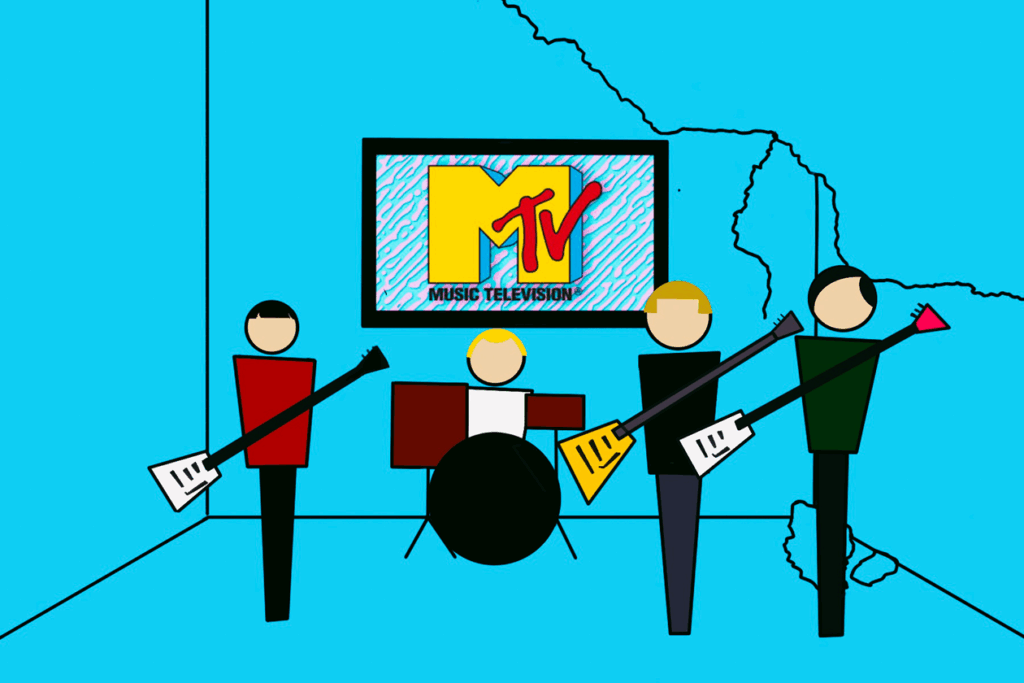
Thirty years later, the Blue Album remains not just a fixture in music but a foundational piece of music history, with Weezer and countless bands around the world still driven and consumed by its pure, melodic pop sound.
“If it’s feeling vital and important to the world now, like, we’re happy to come along.”
– Rivers Cuomo, LA Times, 2024