
 juno Rylee Stump-Schultz
“I was really fucking good tonight, wasn’t I?”
GIRL MUSIC is independent music journalism for anyone that loves pretty art and music.
»Consider buying me breakfast or coffee on Ko-Fi/PayPal, or leaving me a small tip on Venmo.
« Contact me at juno.rylee.schultz@gmail.com if you need someone with experience in mock reviews, copy editing/writing, PR work, etc »
Words, research, and edits: Juno Rylee Schultz (she/her)
Research and edits: Kylie Tuinier (she/her)
Edits: Bex Stump (she/her) and Nathan Miller (he/him)
It was November 18, 1993, and Kurt Cobain was reluctantly participating in the final blocking rehearsal for Nirvana’s appearance on MTV’s Unplugged series, a format which encouraged artists to perform softer, acoustic renditions of their music.
Nirvana’s MTV Unplugged in New York performance nearly didn’t happen. Kurt Cobain was terrified according to those around him at the time, and there were arguments with MTV over what to expect, which songs would be performed, and even the guest musicians Cobain chose to include.
Kurt Cobain insisted on performing with a relatively unknown folk/punk duo known as The Meat Puppets; six songs would be covers, and five in total would be about death. Nirvana bassist Krist Novoselic would even play an accordion for a song, despite the Network’s wishes.
Kurt was so nervous that he even begged MTV Executive Amy Finnerty to arrange the crowd so the nicest and most supportive people he knew could be visible to him during the performance.
According to Heavier than Heaven biographer Charles R. Cross, Kurt was terrified that “he’d panic during the show and ruin the taping.”
Amy Finnerty said Cobain told her “I’m scared” after stopping one of the final soundchecks. In another attempt to squash his nerves, Cobain asked Finnerty if everyone would still clap even if he didn’t play well.
“Of course, we’re going to clap for you,” Finnerty insisted, while agreeing to sit somewhere easy for Kurt to see her.
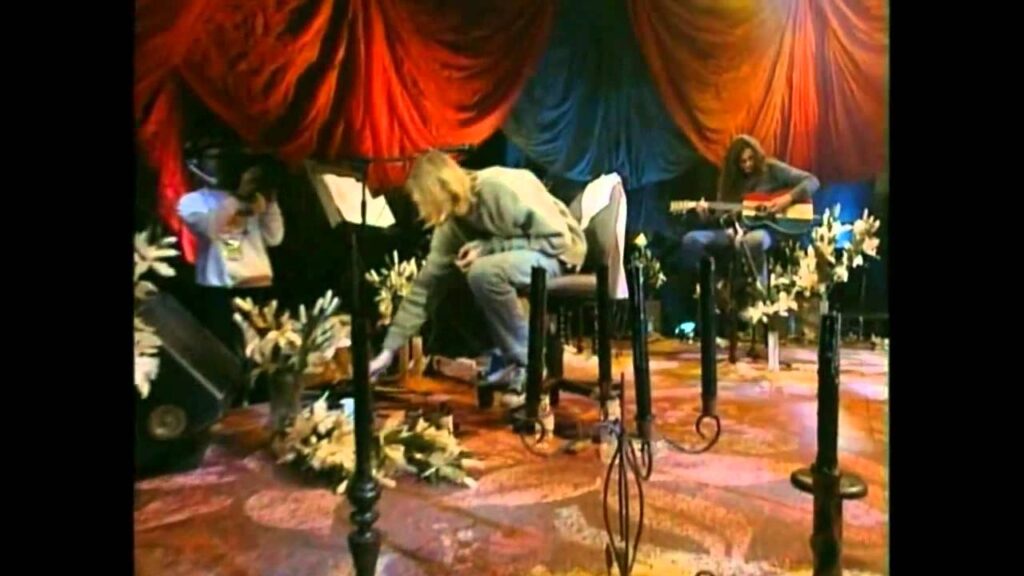
Before the show began, Kurt laid on a couch complaining about stomach issues, asking for some Kentucky Fried Chicken. A member of the band located Amy Finnerty explaining she needed to “get something” to help him out.
“They told me that he’s not going to make it on the show if we don’t help him out.” – Amy Finnerty
Finnerty asked another MTV employee to obtain Valium for Kurt “from a corrupt pharmacist” but another delivery arrived, one that had apparently been set up by Cobain. Kurt then asked for some fretboard lubricant, saying he had never used it, but that his Aunt Mari did when he was growing up.
It was a miracle the show was about to happen; after all the messy rehearsals over the past few days, everyone around Nirvana at the time was anxious about how it would go. The anxiety around Kurt was palpable for anyone around.
“Kurt was really, really nervous.” – Krist Novoselic
“He was terrified.” – Product manager Jeff Mason
“[During rehearsals] Kurt would show up looking like the apparition of Jacob Marley, all bound up in flannel, in a cutting-up-a-deer hat. He looked like a little, old farmer. He thought this disguise would make him fit in with the locals in New York.”
– Curt Kirkwood, Meat Puppets
Instead of well-known radio hits, Kurt was instead offering cover songs from the Meat Puppets, one of Kurt’s favorite bands and friends of his, with their long-haired guitar players joining Nirvana onstage, and bassist Krist Novoselic playing an accordion.
The mood was palpably tense backstage. Nirvana had an exuberant year; the group’s third studio album, In Utero, recorded in February, releasing in September, had gone double platinum, selling over two million units, and debuting at #1 on the Billboard Top 200; and the group had made their second appearance on Saturday Night Live.
But none of those things could prepare Kurt Cobain’s anxiety for how vulnerable he knew he was about to be on stage to unleash the performance he knew was possible in his head.
Kurt walked out on stage, surrounded by stargazer lilies he had selected for this evening, wearing a ratty cardigan and “hair that hadn’t been washed in a week,” his appearance somehow the usual and dressed up a little. Kurt sat down in a spinning desk chair, prepared his acoustic guitar, and greeted the audience in a hushed, shy voice.
“Good evening. This is off our first record. Most people don’t own it.”
Nirvana then began a softer and lighter version of ‘About a Girl,’ one of the earliest pop songs Kurt had written, after listening to Meet the Beatles for hours on repeat.
Things were quieter in volume, but higher in emotion.
As Charles R. Cross explains in Heavier Than Heaven: “He began with ‘About a Girl,’ which was performed in a markedly different arrangement, stripping its volume to emphasize the basic melody and lyrics. It wasn’t exactly ‘Unplugged,’ since Nirvana used amps and drums, albeit with pads and brushes. A more accurate title was suggested by Jeff Mason: ‘They should have called it ‘Nirvana toned-down.”
The second song, ‘Come As You Are’, followed the same suit, quieter in volume than a standard Nirvana show, but the emotional heights were equally as high as ‘About a Girl.’
Things were a little slower, the drums were quiet but present, and Kurt’s voice was at the center, his voice cracking in between notes like water ripples interrupted by lily pads. And yet inside of some of these “missed” notes, an energy of pure emotion highlights into something far more beautiful.
Nirvana brought out their first of six covers for a chilling rendition of “Jesus Wants Me For A Sunbeam” from Scottish-punk band, The Vaselines, with bass player Krist Novoselic standing tall at the center, playing the chorus and melody with an accordion.
While preparing for the fourth song, a cover of David Bowie’s ‘The Man Who Sold the World,’ Kurt chose to speak with the audience for the first time, joking that he would probably screw up the song.
While the guitar was being tuned, he joked, “I thought we were supposed to be a big, rich rock band. We don’t have extra guitars” before sarcastically adding “well, these people are just gonna have to wait” to the audience’s direction.
He was shy and speaking to the audience in third person, but Cobain still managed to invite the audience into the performance more.
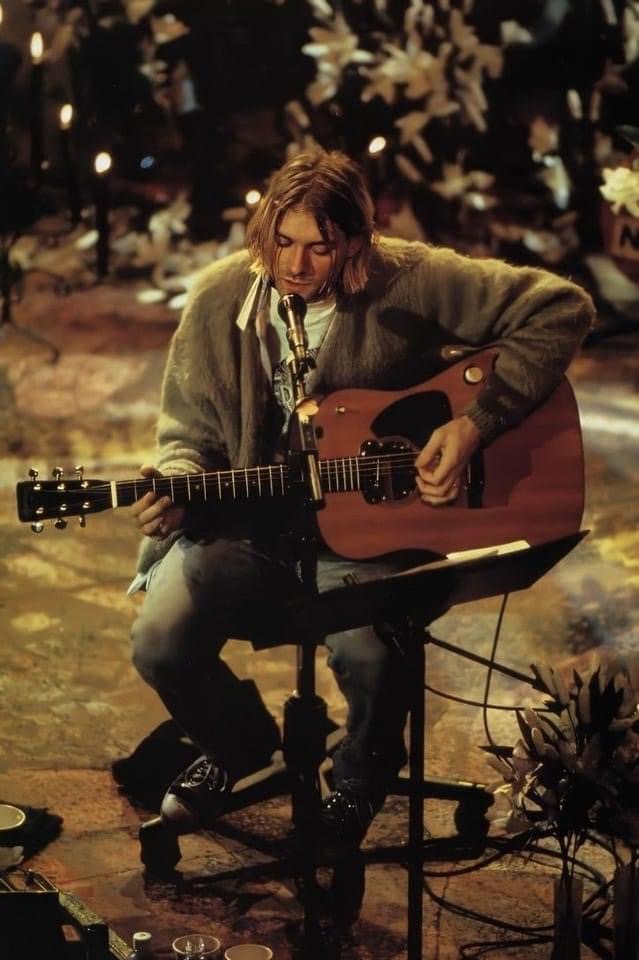
As Cross explains in Heavier than Heaven: “You could almost hear the collective sigh of relief from the crowd. For the first time in the night he seemed present.”
Kurt’s voice continued to crack during ‘Pennyroyal Tea,’ a song he performed by himself, as the band had never successfully rehearsed this arrangement prior to the performance.
Prior to the encore, when Kurt asked for suggestions, members of the audience asked for ‘In Bloom’ and finally ‘Rape Me,’ prompting Cobain to laugh and respond with, “Yeah, I don’t think MTV would let us play that.”
Kurt finally landed on Leadbelly’s ‘Where Did You Sleep Last Night,’ which was likely what he already had his mind set on playing as the final song.
Kurt performed the song as if he was a ghost haunting the stage, his voice cracking into and out of notes, his eyes closed.
There’s a pause toward the end where Kurt looks up toward the lights, his eyes glowing, and it’s like time stops. He summons a breath before continuing and it’s as if everyone in the hushed room does too. Kurt then lets his breath out before diving through the final chords, his voice nearly collapsing from the primal screams.
After finishing the song, Kurt smiles at the crowd, says “Thank you,” and signs three autographs for fans before quietly leaving.
“When you saw the sigh on his face before the last note [in Where Did You Sleep Last Night], it was almost as if it was the last breath of life in him.” – Amy Finnerty
Kurt left with Amy Finnerty, skipping the after-party, instead choosing to focus on his insecurities over what had been an ethereal and magical performance.
“No one liked it. They just sat there silently,” Cobain complained to Finnerty.
Amy was in disbelief, shocked that Kurt was finding fault in what everyone else considered to be a once-in-a-lifetime show.
“Kurt, they think you are Jesus Christ. Most of these people have never had the opportunity to see you that close. They were totally taken with you.”
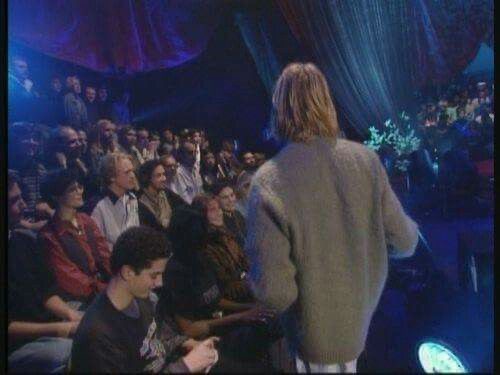
Kurt’s posture began to soften as he made his way to call Courtney on the phone.
“I was really fucking good tonight, wasn’t I?” he declared while nudging Finnerty.
It was perhaps the last high point in Kurt’s life, before his stomach issues, and everything else that plagued him, continued to spiral out of control, in the final months of his life.
The morning prior to the performance, Kurt was back to throwing up bile and blood. He was back to seeing different doctors, in an attempt to heal his stomach ailments.
Kurt’s stomach issues had long plagued him but by late 1993, they were progressing.
From Heavier than Heaven: “Ten days [after Unplugged] in Atlanta … [Kurt] was lying on the dressing room floor clutching his belly. The tour caterers had disregarded his request for Kraft Macaroni and Cheese–instead, they concocted a dish of pasta shells, cheese, and jalapeno peppers.”
Courtney showed it to Kurt’s management before throwing it in the trash, saying “why don’t you just let Kurt be who he is?”
It was at this same time that his distrust in his management was growing, prompting Kurt to have his longtime friend Dylan Carlson look over all his finances to look for issues.
On December 10, Nirvana met up with MTV’s Kurt Loder and Amy Finnerty for an interview and vibes. Loder and Nirvana trashed a hotel room, reportedly causing nearly $12,000 in damages, and everyone was too inebriated for the interview footage to air.
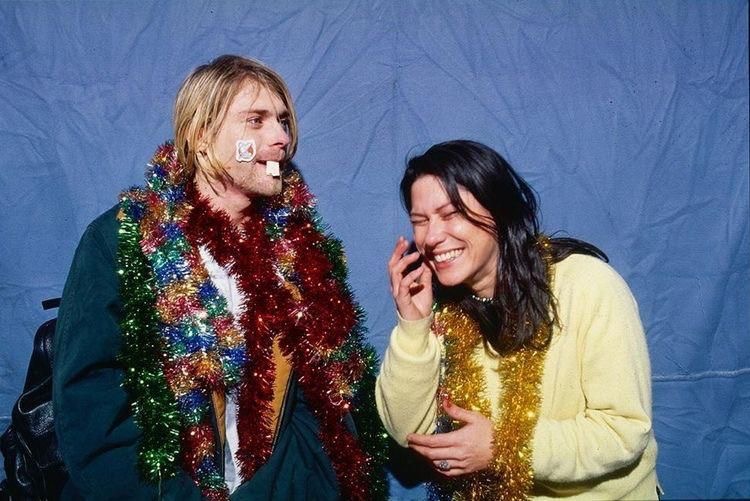
“It never aired because everyone, including Kurt Loder, was so fucked up on red wine.” – Amy Finnerty
On December 20, when the In Utero tour reached Denver, Kurt met up with friend and musician John Robinson. When Robinson told Kurt his band, The Fluid, had broken up, and that he was wanting to make music with strings, piano, and horns, Kurt grew excited.
According to Cross’s Heavier than Heaven, Kurt blurted out “Wow! That’s exactly what I want to do,” referring to Nirvana’s fourth and next album.
Cross continues, writing: “[Kurt] declared he’d been discussing a similar idea with Mark Lanegan, and invited Robinson to collaborate with the two of them after the lengthy tour was over. He’d also been talking about working with R.E.M.’s Michael Stipe.”
Nirvana rested during the end of December. Kurt decided to attempt a voluntary detox at Canyon Ranch Spa in Arizona, with Kurt being warned his drug addiction would spiral into tragedy if he didn’t get clean soon.
According to Charles R. Cross, Kurt seemed to take that to heart, expressing “several reflections on the significance of the passing year.”
In January 1994, the Cobains moved into a new house in “one of Seattle’s oldest and most exclusive neighborhoods,” living next to the CEO of Starbucks at the time. According to Cross, the neighborhood was mostly “old money” outside of a few rock stars, including one of the members of R.E.M.
It was at this time that Kurt decided to do as many drugs as possible with Dylan Carlson before Nirvana embarked for the European portion of the In Utero tour in March. Courtney tried to help Kurt stop, or even just decrease his drug usage, but at this point he was having drugs hidden in bushes by dealers who knew to be discrete.
Nirvana’s rehearsals continued during this time, though, according to Cross, “Kurt infrequently showed.”
Kurt scheduled visits with his dad during this time, but his fear of inevitably exposing his visible struggles with addiction resulted in Kurt asking his nanny to send his dad away.
Nirvana had been offered the lead headline slot for Lollapalooza 1994, which only added fuel to Kurt’s already stressful life. Everyone around him, including the rest of the band, all thought it was a no-brainer decision.
But Kurt did not want to play the festival, even if it did come with nearly ten million dollars.
In the last week of January, Nirvana held recording sessions at Robert Lang Studios. Kurt missed two of the three days, but according to Cross, “on the third day, they worked for a full ten hours, [and] laid down tracks for eleven songs.”
The names of the songs from Kurt were “Skid-Marks,” “Butterfly,” and “You Know You’re Right.”
The other songs were cut and later used for drummer Dave Grohl’s first Foo Fighters album.
According to Cross, the band was in good spirits after the sessions, finishing in the “early evening” and “celebrating [by] going out to dinner; Kurt told Robert Lang he “wanted to book more time when they returned from Europe.”
Kurt called his Dad that evening, talking for over an hour, “the longest conversation between the two in over a decade.”
The two talked a lot about Kurt’s daughter, Frances, with Kurt reciting “all the latest things she could say and do.”
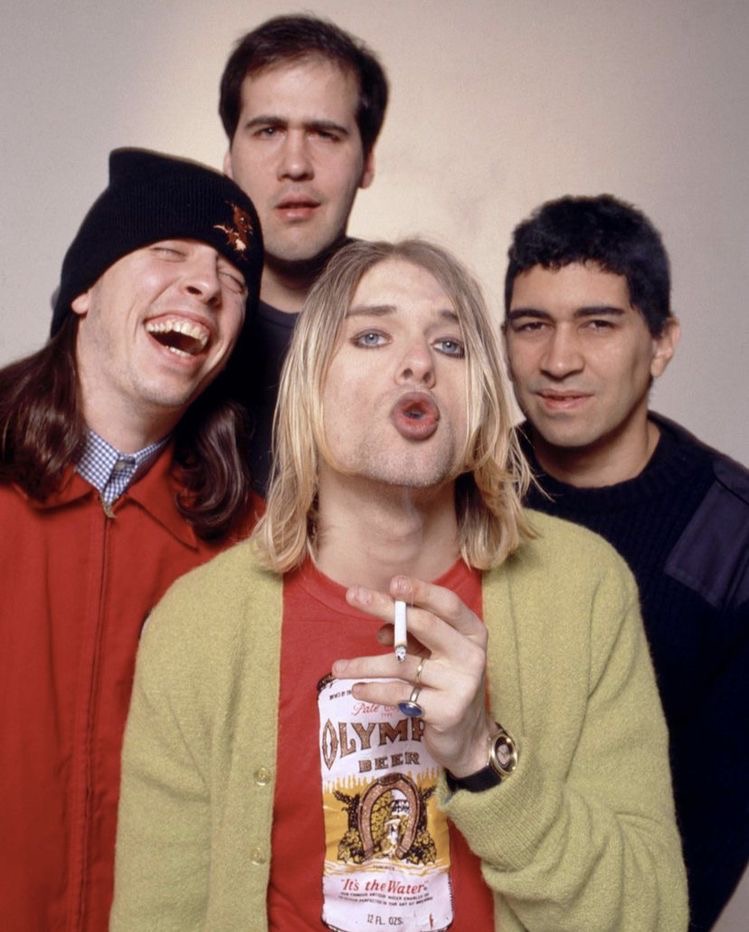
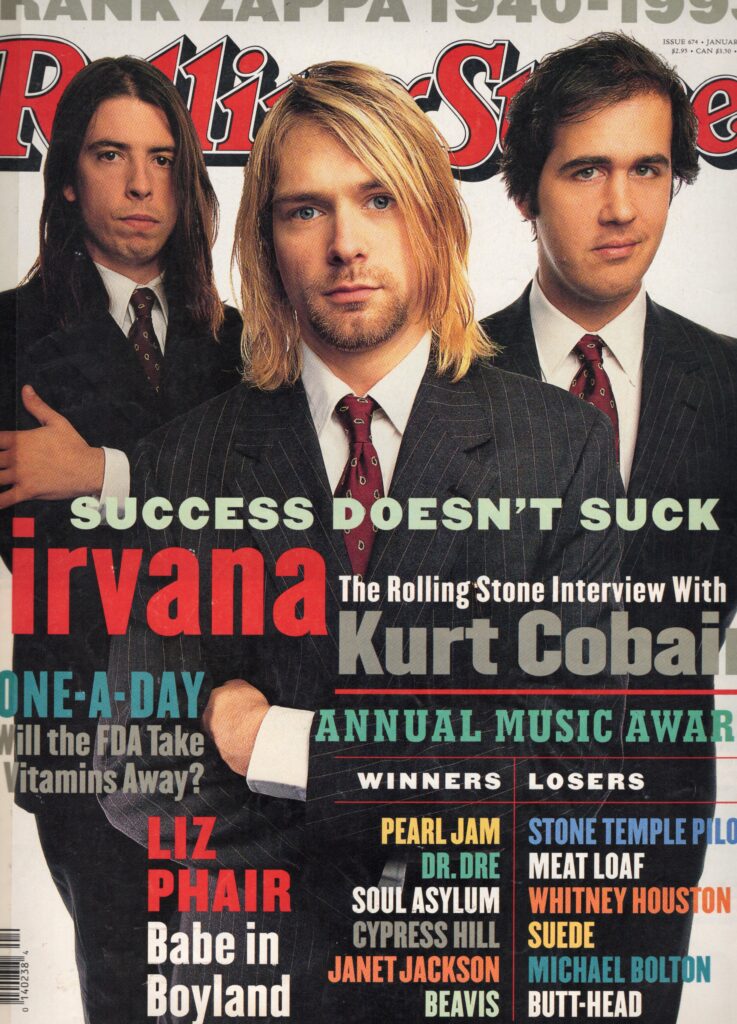
On February 4, Nirvana flew to France, for TV appearances, as well as performances for the In Utero tour. Kurt thought it would be funny if the band members purchased pinstripe suits for the TV appearances.
The band played the same as usual, but dressed for something distant and fancy, far away from the howling of a rock band.
Kurt’s stomach issues and mental health were in an especially poor place at this point.
From Cross’s Heavier than Heaven: “In Paris, the band did a photo session with photographer Youri Lenquette; one of the pictures showed Kurt jokingly putting a gun to his head.”
According to Cross, it only got worse, with Kurt “talking about canceling only three dates into the 38-date tour.”
“He hated everything, everybody. Hated, hated, hated … He was in Madrid, and he’d walked through the audience. The kids were smoking heroin off tinfoil, and going, ‘Kurt! Smack!’ and giving him the thumbs up. He called me crying. He did not want to be a junkie icon.”
– Courtney Love
Kurt inquired about what it would cost the band to cancel the rest of the tour. He was told “that because of past cancellations, Nirvana would be liable for damages from any missed shows, unless there was illness.”
On March 1st, when Nirvana arrived in Germany, Kurt told everyone he was sick. He left to get drugs with a per diem advance before the show, which would be Nirvana’s final performance.
Nirvana opened with a random cover of “My Best Friend’s Girl” from The Cars.
After the show, Kurt said he was done, saying “That’s it. Cancel the next gig.”
The next day Kurt saw a doctor and received a sign off saying he was too ill to perform. It was recommended he take 2 months off.
Most of the band and entourage went back to Seattle. Kurt went to Rome to see Courtney and Frances.
On March 3, Kurt broke off a piece of the Colosseum in Rome for Courtney. He got her flowers and candles. And then that evening Kurt took too many Rohypnol, intentionally, in a suicide attempt.
According to Cross, Courtney found him at six in the morning, “on the floor, pale as a ghost, with blood coming out of one nostril.”
Kurt was “fully dressed, wearing his brown corduroy coat [with] a wad of $1,000 in cash in his right hand, [and a] three page note clutched in a tight, cold ball of his left hand.”
Courtney rushed Kurt to the hospital via ambulance, later saying Kurt “was dead, legally dead.”
Kurt’s coma ended as news of his death spread, with him writing “Fuck you, get these fucking tubes out of my nose” when Courtney handed him paper and a pencil. The doctor held a press conference the next day saying Kurt was “dramatically improving.”
It was not widely reported that the overdose was a suicide attempt, especially outside of Rome.
“I’ll follow him through hell.”
– Courtney Love to reporters during Kurt’s 20 hour coma
On March 12 Kurt flew back to Seattle, loudly asking Courtney for Rohypnol “so loudly other passengers overheard him.”
Kurt was taken off the plane via wheelchair and told by his management to prepare for Lollapalooza. The rest of the European tour was off, but Kurt was still being told to headline a festival. Something Kurt had repeatedly expressed he did not want to do.
By the end of March, Kurt’s problems got worse: drugs stopped working, leaving him with no coping mechanisms for … everything.
Kurt agreed to check into an in-patient care facility with a rehab program. He was skeptical because he already tried it so many times, but according to the facility, Kurt was cooperative at first.
“I started having telephone conversations with Kurt where he was very, very loaded. He was using quite a bit of heroin, or some other painkillers. But we also discussed, during some of his more coherent times when he wasn’t gravely impaired, about some of his childhood issues and some of his unresolved family of origin issues, and the pain he was in. He had a lot of stomach pain, which he was medicating with these opiates.”
– Steven Chatoff, Steps recovery center staff, speaking with Danny Goldberg
From Heavier than Heaven: Chatoff felt underneath Kurt’s addiction was “a form of post-traumatic stress disorder, or some form of depressive disorder.” He recommended an inpatient treatment program … suggesting [Kurt’s previous rehab stays were] detox, buff, and shine … [instead of dealing] with the underlying problems.”
Kurt cooperated, saying he had “psychic pain” to deal with, but later changed his mind at the last minute.
Another intervention soon after also failed, with Kurt defying everyone present who pleaded with him to get help.
According to Cross, his “greatest rage” was at Courtney during this confrontation, feeling she had no right to condemn his drug addiction. This fell apart quickly when Kurt learned his wife was committing herself to a rehab program immediately after the now-crumbling intervention.
After Courtney left for rehab, Kurt retreated to the basement with Pat Smear, saying all he wanted “was to play guitar for a while.”
The next day Kurt was confronted by his Mom, Wendy, and his sister, Kim. Both left in tears with Kim pleading, “Do you really hate us this much?”
This prompted Kurt to sarcastically retort, “Oh yeah, I really hate you guys. I hate you guys.”
While Courtney was in rehab, she was unable to reach Kurt by phone. She figured he was out doing drugs, and she was correct in this assumption.
According to Cross, “Kurt showed up at a local dealer’s house later that day, but had bought and used so much heroin that the dealer refused to sell him any more.”
This was from a fear of Kurt overdosing on their drugs, inviting the police into the situation.
By March 1994, Kurt’s drug use had progressed dramatically, with him having “scabs and abscesses” on his arms from the amount of black tar heroin he was injecting. He was also sharing needles with strangers, and it was just a complete downward spiral.
He finally overdosed inside a dealer’s house and was dragged outside to his car, in case the overdose was fatal. Kurt dizzily shook his head from the backseat of his car when the group he was with talked about calling the police.
According to Cross, by this point, Kurt faced another, deeper problem that was making everything else worse: the heroin wasn’t working anymore. Kurt wasn’t even able to get high anymore. He had no way of coping with everything he was already dealing with other than drugs, and now that was slipping out of his grip.
He returned to the house and finally agreed to go into treatment, at the urging of his lawyer, Rosemary Carroll, who had said, “You are making it easy for a lot of these people that you want to stop controlling your life to paint a completely negative picture of you; for them to essentially maintain control, because of the drug issue. If you go do the treatment thing, you give them one less arrow in their quiver, you radically diminish their ammunition.”
Still, committing to what he wanted to try to do proved far more difficult in practice.
A few days later, Krist was picking Kurt up from the house, taking him to the airport, to fly to Los Angeles for in-patient treatment. Kurt screamed and threw a fit, trying to escape from the moving car, when Krist was driving on the highway. He was able to keep driving and pull Kurt back, but only barely.
Krist pulled Kurt toward his airport gate, but in the end, Kurt punched Krist in the face and made an escape. Krist didn’t bother chasing him, since it was clear Kurt wouldn’t go.
Kurt agreed to go the next day, after speaking on the phone with a psychiatrist again. The night before he did as many drugs as possible, hoping to stay as high as long as possible once the in-patient process started.
First, though, he asked his friend, Dylan Carlson, to take him to a gun shop, and to purchase a shotgun for him; Kurt said it was “for protection and because of prowlers.”
That evening Kurt left in a limousine for the airport. Kurt was finally going to give in-patient care treatment another attempt.
Kurt checked into Exodus Recovery Center on March 30, 1994, for a 28-day program. He attended an intake interview for nearly an hour upon arriving, and then met Gibby Haynes, a friend and musician, who was also staying at Exodus.
During Kurt’s time in the facility, he participated in “group therapy, meetings, and individual therapy with his substance abuse counselor, Nial Stimson.”
According to Heavier than Heaven, Stimson said Kurt was “totally in denial that he had a heroin problem.”
When the gravity of the situation was stressed to Kurt, his response was, “I understand. I just want to get cleaned up and get out of here.”
As Cross points out, no one at Exodus Recovery Center knew Kurt was suicidal, nor did they know he had tried to commit suicide in Rome, and so “Kurt was in a regular room … just a short distance away [from] the locked-down psychiatric unit of the hospital.”
In therapy sessions, Kurt mostly discussed legal troubles he was anxious about, including “the worry of potentially losing a lawsuit” against Kevin Kerslake (the original director for the music video for ‘Heart Shaped Box) who was claiming Kurt did not come up with the ideas in the video.
According to Cross in Heavier than Heaven, “Kurt told his counselor he had thought about almost nothing else since Kerslake’s suit had been filed and he worried the case would wipe him out financially.”
Stimson said Kurt shared his biggest fear was losing his house.
Frances was brought by a friend to visit Kurt the next day; Kurt bounced her up and down in his arms and appeared to be in good spirits, if a little out of it, likely from the side effects from the medications he was on.
That afternoon Kurt spent most of his time in the smoking area with Gibby. They shared stories, since this wasn’t their first time inside a facility like Exodus. Kurt had even been committed to that same facility back in 1992. One of the things the two men laughed about was how someone had left by climbing over the wall in the outside area. Kurt and Gibby found it funny since the door was unlocked and patients could simply walk out the door.
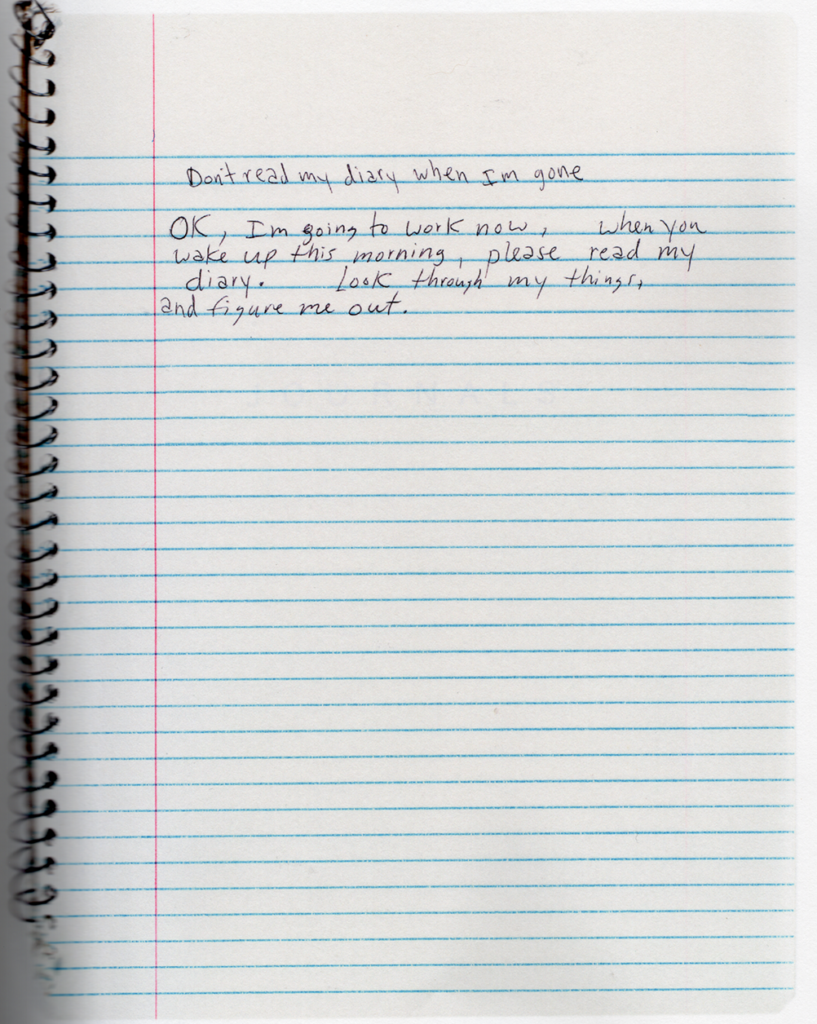
However, just after 7:00 PM that evening, Kurt would escape the exact same way. He brought nothing with him except the clothes he wore, leaving behind clothes and some journal pages. Kurt was always writing and articulating his experiences. In this case, the pages were primarily about how heroin and drugs weren’t working anymore. He wanted to escape his life but drugs weren’t making it possible any longer.
Hours later, Kurt was on a flight back to Seattle. He had already arranged transportation from the airport. He was going home.
Courtney began looking for Kurt as soon as possible, calling all over Los Angeles, even spreading a rumor that he had overdosed, hoping it would push Kurt to reach out to her. He didn’t. Their last conversation was on the phone while Kurt was in the facility. He had told her that no matter what happens, he was really proud of her, and that her upcoming album was going to be really good.
On the plane back to Seattle, Kurt was sitting next to Duff McKagan, bass player for Guns and Roses. Despite bad blood between Nirvana and Guns n Roses, Kurt found himself happy to be speaking with McKagen, who was from the Pacific Northwest, and also a musician. Kurt complained about how he had just left rehab, and Duff said he understood, “as he was in recovery from heroin himself.”
According to McKagan, the two men talked about “what it feels like to be going back home.”
“That’s what he said he was doing, ‘going home,’ McKagan recalled in Heavier Than Heaven.
When the plane landed, Duff went to offer Kurt a ride, but he was already gone.
Kurt Donald Cobain was born on February 20, 1967, in Aberdeen, Washington.
In 1968, when Kurt was just over a year old, his Aunt Mari wrote a paper about Kurt “for her home economics class.”
From the report: “His mother takes care of him most of the time, giving him praise when he deserves it, and by taking part in many of his activities. He responds to his father in that when he sees his father, he smiles, and he likes his dad to hold him. He makes his wants known by yelling loudly at first, then crying if the first technique doesn’t work.”
According to Charles R. Cross, Mari reported Kurt’s favorite game was “peekaboo” and his first words were “coco, Momma, Dadda, ball, toast, bye-bye, hi, baby, me, love, hot dog, and kittie.”
Kurt enjoyed playing the harmonica and drums, and cried whenever he was laid down for sleep. He wanted to keep moving and explore his bright, new world.
Before Kurt was even two years old, he was recorded singing “The Beatles’ ‘Hey Jude” and “the theme to ‘The Monkees.”
His Aunt Mari said he wrote his first song on the piano at age 4.
“‘We went to the park, we got candy,’ went the lyrics. I was just amazed. I should have plugged in the tape recorder.”
– Aunt Mari, Heavier Than Heaven
Kurt had an imaginary friend, who Kurt called ‘Boddah,’ but a story was created for Kurt to move on from his imaginary friend, by saying Boddah had been drafted into Vietnam. Kurt was later heard looking for Boddah through the Tape Echo function of his aunt’s tape machine.
Kurt’s sister, Kim, was born when Kurt was three years old. He insisted on carrying her inside when the family came back from the hospital.
In September 1972, Kurt started kindergarten, where he was known to be curious, excited, and to be carrying “a Snoopy lunchbox.”
According to Cross, Kurt was an outgoing and excited kid, having been the only student to pet a bear cub when another student brought it in for show-and-tell.
By age 5, Kurt was creating paintings of Disney characters, werewolves, and even the Creature from the Black Lagoon. His interest in music continued to grow as well.
“Even when he was a little kid, he could sit down and just play something he’d heard on the radio. He was able to artistically put whatever he thought onto paper or into music.”
– Kim Cobain, Heavier than Heaven
Kurt got his first record this year too, a single by Terry Jacks called ‘Seasons in the Sun.’
He was also trying to play his Aunt Mari’s guitar at this time, which was reportedly “so heavy it made his knees buckle.” But that still didn’t stop him from belting out made up songs while strumming along.
Kurt’s parents would divorce when he was 9, which would prove to be a hit against Kurt’s identity and self-esteem. He thought his family would always be together, and this would greatly damage his sense of self-worth and security.
Divorce was less common during this time as well, making it also feel like a shameful and embarrassing situation as well for Kurt.
That year, before moving in with his Dad, Kurt wrote “I hate Mom, I hate Dad. Dad hates Mom, Mom hates Dad. It simply makes you want to be so sad” on his bedroom wall.
According to family at the time, Kurt’s eye began twitching from stress at this time.
Kurt’s deep interest in music had him gravitate toward playing drums in the school band. According to biographer Cross, this was “an accomplishment he sought to downplay to his friends while also savoring it.”
Kurt also excelled in art classes, and was observed to be drawing often in the other classes as well.
It was around this time that Kurt also started making short films with his parents’ Super-8 camera.
According to biographer Cross, “one of the first productions was an elaborate Orson Welles’ War of the Worlds rip-off that showed aliens–played by Kurt sculpted with clay–landing in the Cobain backyard.”
By eighth grade, Kurt was transfixed on marijuana, LSD, and To Kill a Mockingbird. His arguments and school truancy, and eventual refusal to cooperate with his Dad, pulled him around to living with several family members for short periods of time. This likely added to his fragile sense of being and emotional security, already damaged from his parents’ divorce, but it was also the eighties and people only had so much patience.
In 1982, when Kurt was living with his Uncle Jim, he had access to his massive record collection. Later that year, while living with a different Uncle, Kurt was able to get guitar lessons. His Uncle Chuck paid for these, and while Kurt would later claim he “only took one or two lessons,” according to biographer Cross, the lessons stretched on “for months.”
Kurt would attend his first concert when he was sixteen, shortly after getting his driver’s license; the concert was Sammy Hagar, but in 1983, Kurt would discover a local band called The Melvins, and this style of punk rock would have a profound impact on him.
From Kurt Cobain’s Journals: “In the Summer of 1983 … I remember hanging out at a Montesano, Washington Thriftway when this short-haired employee box-boy, who kind of looked like the guy in Air Supply, handed me a flyer that read: ‘The Them Festival. Tomorrow night in the parking lot behind Thriftway. Free live rock music.’ Monte was a place not accustomed to having live rock acts in their little village, a population of a few loggers and their subservient wives. I showed up with stoner friends in a van. And there stood the Air Supply box-boy holding a Les Paul with a picture from a magazine of Kool Cigarettes on it. They played faster than I ever imagined music could be played and with more energy than my Iron Maiden records could provide. This is what I was looking for. Ah, punk rock. The other stoners were bored and kept shouting, “Play some Def Leppard.” God, I hated those fucks more than ever. I came to the promised land of a grocery store parking lot and I found my special purpose.”
Kurt Cobain was born again, behind a grocery store, under the sounds of free rock music in 1983, when he was sixteen. It was also during this time that Kurt’s clean clothes and preppy shirts transformed into crusty, unwashed sweaters and hair. According to Cross, many other students recall Kurt wearing a trenchcoat nearly every day that fall.
“This is what I was looking for. Ah, punk rock.“
Kurt also began abusing alcohol at this time, after finding a homeless man who would buy for him.
Kurt moved from couch to couch with different friends when he was seventeen, after conflict with his Mom’s new boyfriend made life too unbearable for him. This would be the time he would later claim to have lived under a bridge, but according to his friends, there’s no way this would have been possible due to how high the water came up.
After a few months of couch hopping, Kurt would go back to his Dad’s house, where the only thing that made his life bearable was playing guitar for hours in his basement bedroom.
During the summer of 1984, Kurt would find religion, and solace, with his friend Jesse Reed, and his family. Jesse’s family was more open with expression, as well as playing music; the regularly scheduled family meals, as well as the ability to play guitar, made this a good environment for Kurt. Though Kurt would drop out of school after some time, and take up work as a dishwasher and prep assistant at a nearby restaurant, with the help of Jesse’s father, Dave.
Dave had been in a locally known band called The Beachcombers with one of Kurt’s uncles, so it was through stories and the warmth of The Reed family that Kurt began to start to imagine himself more seriously as someone who would one day have a record contract.
It helped his delusions of grandeur that he had taken up a part time janitor job at the very same high school he had dropped out of months earlier. According to Cross, Kurt would only last “two months” before he dropped that, too.
Soon after it was time for him to stop living with The Reed family. He had begun to wear out his welcome, and he wasn’t doing anything besides sleeping, making messes around the house, drugs, and music. Though Jesse would follow Kurt.
On June 1, 1985, after a short stay with Jesse’s grandparents, the two would get their first apartment, on 404 North Michigan Street. It was a “tiny $100-a-month studio” with “pink walls.”
Kurt decorated the apartment by writing “Satan Rules” and “666” on the windows with Edge Shaving Gel, which they had plenty of from a marketing promotion filling the neighborhood’s mailboxes with samples. The two would also steal lawn ornaments “tricycles, and backyard recliners” from around the neighborhood for the apartment.
On July 23, 1985, Kurt would have his first arrest after being caught vandalizing the outside of the YMCA with the phrase ‘Ain’t got no how watchamacallit.’
Kurt would be given “a suspended 30-day sentence,” as well as a $180 fine, and the warning to “not get into any more trouble.”
Soon after Kurt would damage Jesse’s yearbooks and other personal items, and kick him out of the apartment. According to Cross, this was likely due to Kurt feeling threatened by Jesse’s graduation and plans in life, and the idea that Kurt would rather push someone away than risk losing them.
Kurt was evicted two months later, with the landlord putting all his belongings, “including the stolen crosses,” on the street in boxes.
Kurt was homeless again but would sleep in cars of friends, and a few couches, until it became too cold. In October 1985, Kurt begged a former English teacher of his to take him in, Lamont Shillinger, where, according to Cross, the structure was similar to when Cobain stayed with The Reed family.
As Cross writes: “The Shillingers ate dinner together, spent time as a family, and their songs were encouraged to play music. Kurt was accepted like family and put into the rotation of chores, which he did without complaint, grateful for being included.”
Kurt slept on the sofa with a sleeping bag, and enjoyed Thanksgiving and Christmas with the Shillinger family in 1985.
By Winter 1985, Kurt was rehearsing with Fecal Matter, his first band, featuring Dale Crover on bass and Greg Hokanson on the drums.
Kurt would beg Crover to go with him to his Aunt Mari’s to record Fecal Matter’s first tape.
As Kurt’s Aunt Mari recalls in Heavier than Heaven: “[Kurt] arrived with a huge notebook full of lyrics. I showed him how to adjust a few things, how to record with the reel-to-reel, and he went right at it.”
According to Cross, Kurt’s vocals were recorded first, “and then he and Crover would track the guitar, bass, and drum parts over the vocals.”
The first songs were titled: “Suicide Samurai.”; “Bambi Slaughter”; “Buffy’s Pregnant”; Downer”; “Spank Thru”; and “Sound of Dentage.”
Kurt’s Aunt Mari recalls being disturbed by some of the lyrics for “Suicide Samurai,” but she just dismissed it as “typical teenage behavior.”
Kurt used a tape machine at the Shillinger house to create copies to pass out to people around. Though Fecal Matter would never perform live, it was still a galvanizing experience for Kurt’s dream of being a musician with his own band.
In May 1986, Kurt’s time with the Shillinger family would come to an end; Kurt was caught by the police, drunk on the roof of an abandoned building, and Lamont “decided his parenting of Kurt Cobain had gone far enough.”
Kurt stayed in jail for just over a week since he wasn’t able to pay bail.
On September 1, 1986, Kurt’s Mom would loan him the $200 he needed to get into an apartment, which was really a small home behind another bigger house. According to Cross, it probably wasn’t up to code; “the roof was rotting, the boards on the front porch had fallen to the ground, and there was no refrigerator or stove.”
Since it was close to Kurt’s Mom’s house, he would do laundry and eat food at her house.
Kurt chose Matt Lukin for a roommate, bringing him closer to the first band he had idolized. Lukin played bass for the Melvins and he and Kurt quickly turned the place into a band hang out spot. The place became a party spot, even though it smelled atrocious from the smell of turtles, which Kurt set up in the main living room, complete with holes drilled in the floor for the small pool to leak turtle shit through.
Kurt got a job as “a maintenance man” at some nice condos nearby. Things rarely broke so Kurt did end up cleaning rooms on occasion, but it was a tolerable job for him, with him often bragging to friends about how easy it was.
A few months later he would leave the job, and work installing carpet with a friend, though he would end this job quickly, arguing his “hands are too important,” fearing he would cut them. He told everyone if he couldn’t play guitar then he would have to kill himself.
Back at his apartment, Kurt had been performing in his next formation of a band, featuring Krist Novosellic on bass, and a guy named Bob McFadden on drums. Kurt had met Krist at church parties while living with the Reed family, though the Reeds disapproved of Krist, saying he was only there for the girls. Another formation of the group had Kurt on drums, Krist on guitar, and a guy named Steve Newman on bass.
Though these were hardly bands and mostly just ideas in Kurt’s head, with the guys only having played and rehearsed a few times.
Shortly after, Kurt and Krist formed a group known as The Sellouts, where they only played covers of Creedence Clearwater Revival songs, “knowing these would go over big in Aberdeen taverns.”
By Spring 1987, Kurt was getting impatient, and also playing music more seriously.
He and Krist Novosellic had connected deeply, and they were playing with a drummer from around the area named Aaron Burckhard. It was a group with no name at first, but it felt closer to what Kurt was looking for.
According to Cross, “they would practice almost every night during the first few months of 1986, until Kurt thought they had done enough for the evening.”
They would often get Kentucky Fried Chicken afterwards.
“Kurt loved Chicken Littles from KFC. Once Kurt took electrical tape with him and made an inverted cross on the speaker of the drive-thru. We watched from the van laughing our asses off while the employees had to come outside to peel it off.” – Aaron Burkchard recalling his time playing with Kurt in 1986, Heavier Than Heaven
Lukin and Cobain would have a falling out later that year as well, with Kurt cutting the apartment in half visually with electrical tape, which even included the bathroom. When Lukin and his friends needed to use the bathroom, Kurt told them to go outside.
The beginning of 1987 would bring a new relationship for Kurt, his first real girlfriend, Tracy Marander, whom he had met two years earlier while enjoying a show.
This would mark the beginning of Kurt embracing his pop-song sensibilities, something Lukin and the Melvins weren’t encouraging from their prior closeness to his proximity.
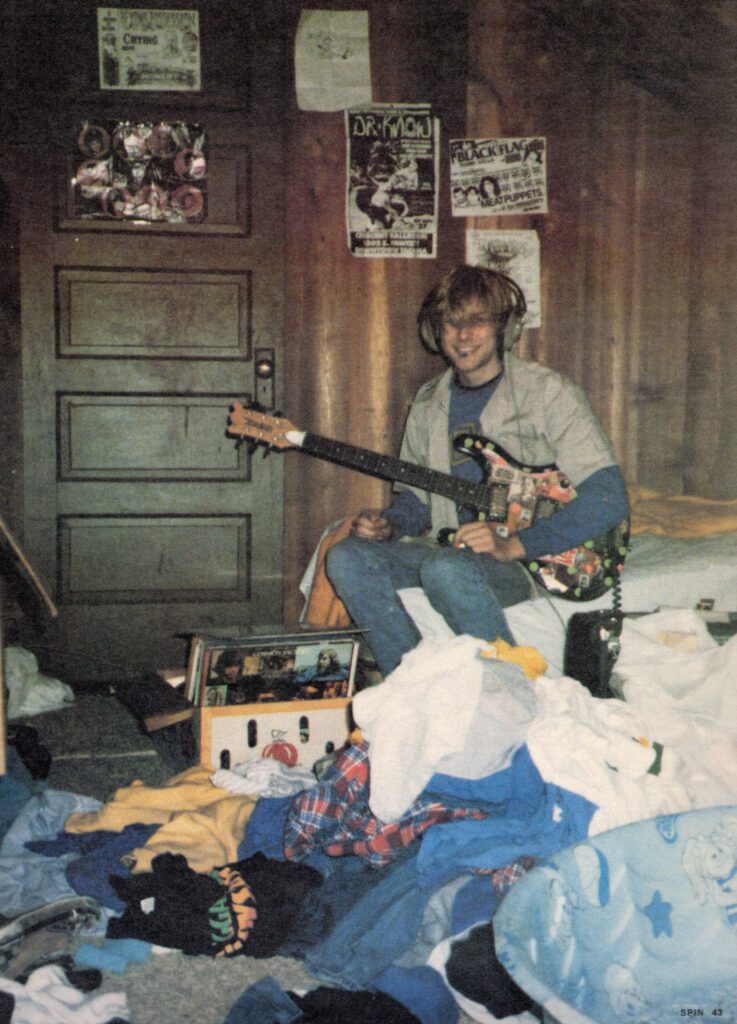
Kurt’s still nameless band would play their first show “on a rainy night in early March 1987.”
Names up for consideration at this point included ‘Poo Poo Box,’ ‘Designer Drugs,’ ‘Whisker Biscuit,’ ‘Spina Bifida,’ ‘Gut Bomb,’ ‘Egg Flog and yes, even ‘Puking Worms.’
Everything was up in the air, including Kurt’s stomach, as the packed van headed for Kurt’s first ever show where he was front and center.
This was at a house party in a rural area, “a half hour south of Aberdeen,” in a town called Raymond.
According to Cross, Kurt “complained incessantly that the band deserved something better than this gig.”
“We’re playing in Raymond, at someone’s house …”
“They don’t even know what radio is yet. They’re going to hate us.”
Kurt whined the entire way there, but in reality, he was probably thrilled.
When they arrived, Kurt’s nerves shot up even more. This would be the most stressful show he would play until November 1993 for MTV, six and a half years from this moment.
Krist ran to the bathroom to see if the medicine cabinet had anything good. He then took his shirt off and covered his chest in fake blood before checking the fridge for beer.
While Krist was loudly remarking on how “they have good beer” upon discovering Michelob Light, he heard Kurt’s guitar distortion. Nirvana’s first gig was beginning, before it even had a name.
The band first played ‘Downer,’ before tearing into ‘Aero Zeppelin,’ Kurt’s voice shaky and still unscripted into the monolith it would later become. These were two of the earliest songs Kurt had written but the foundation of Nirvana was there for anyone who was patient enough to listen.
It would be several months before the band’s next show, and even more until Nirvana had a name, but Kurt smiled while everyone argued who was least drunk to drive everyone back to Aberdeen.
He could see the vision.
He could see Nirvana.
While Kurt Cobain’s life would tragically, prematurely end, the music and lyrics of Nirvana have continued to influence and inspire generations of people, long after the band’s final performance on March 1, 1994.
Through legions of artists–from Kid Cudi to Boygenius–that have sampled and paid tribute to Nirvana–through sampling the music and recreating iconic photo moments–it’s been made abundantly clear for the last thirty plus years that the world continues to be shaped by the music and lyricism of Nirvana.
In addition to the music, Kurt Cobain’s writing and what he would remark in interviews have long given permission to so many marginalized people who felt represented and seen by the messages Cobain would carry and repeat.
Today, Nirvana commands nearly forty million listeners on Spotify and other streaming services, with many of the songs, including ‘Smells like Teen Spirit’ and ‘Come As You Are’ having billions of streams. The message and the music continue to inspire new generations–evident in how often Nirvana appears across TikTok videos and t-shirts–with every new group of kids being able to relate to the existential pop-songs and lyricism of Kurt Cobain.